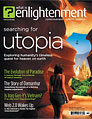
This Revolution will be DigitizedThe team behind Zaadz, the internet’s popular new alternative community, shares the inspiration behind their bold vision to become the first global brand of the integral revolution. Interview by Carter Phipps and Andrew Cohen
Introduction
There is idealism and then there is idealism. At least that’s what we realized in our conversations with Brian Johnson, founder of the hip and happening new social-networking site Zaadz.com. Johnson and his dedicated management team have spent the last year trying to uplevel the web’s hottest trend by bringing together cultural creatives, integralists, artists, spiritual progressives, counterculturalists, seekers, visionaries, leaders, activists, and various others to talk, blog, share, dialogue, discuss, argue, create, connect, explore, and generally do everything else that people do on these exploding virtual communities on the internet. Now for those who haven’t yet been touched by this latest internet revolution, social networking sites are sort of mini social clubs, online communities that allow individuals to meet and connect with like-minded people from all over the world. And given that Rupert Murdoch recently purchased MySpace—the most popular of these influential websites with its more than one hundred million users—for a cool five hundred and eighty million dollars, suffice it to say that interest has skyrocketed. Zaadz is like MySpace with one important caveat: Only a certain type of person need apply. What type? Well, just check out the front page of the website, and things quickly become clear. “Let’s change the world” are the first words you’ll see, in bold black type. A couple of lines down comes “Our mission. We’re gonna change the world,” just in case you missed it the first time. And what kind of people are they looking for to accomplish this mission? You guessed it: “People CRAZY enough to think they can change the world”—just a few lines farther down. The source of all of this optimism is Johnson himself, Zaadz’s self-described “philosopher and CEO.” Young, smart, idealistic, and ambitious, Johnson named his business after the Dutch word for “seed,” and he has surrounded himself with a passionate young management team that is equally dedicated to the enormous potential of Zaadz and social networking. He likes to say things like, “We’re in the process of building THE most inspired community of people in the world.” And truth be told, after watching Johnson and his team go from basically nothing to a heck of a business in less than two years (fifty thousand members and counting—including a significant number of What Is Enlightenment?’s friends and colleagues), it’s hard not to believe in these take-no-prisoners, unapologetic utopians who seem to live and breathe inspiration and who actually are convinced that a bunch of individuals getting together on a website can add up to more than a hill of beans in this crazy world.

In fact, when you speak to Johnson, you can’t help but notice that his eye is on a prize much bigger than creating an influential and successful website. For him, Zaadz is destined to become not just a community or a network, but a brand. Think Virgin if Richard Branson were a meditator and read integral philosophy. Johnson ultimately envisions the name Zaadz applying to a whole host of products and companies, from resorts to urban centers to who knows what else. And given the power of the internet and the fresh perspectives and worldcentric idealism of a new generation of technology-conscious countercultural entrepreneurs, don’t be surprised if one day the name Zaadz becomes a regular part of your lexicon. So for this issue of WIE on the nature of utopia and community, we spoke with the team behind Zaadz, who are performing one of the most interesting experiments in the power of the internet to cross borders, cultures, and countries and create a conscious, committed social network unlike any that the virtual world, and perhaps the real world, has ever seen.
–Carter Phipps Interview WHAT IS ENLIGHTENMENT: Brian, as the founder of Zaadz, what is your vision for the website, and what was it that inspired you to found the company in the first place? Brian: I think what makes Zaadz unique is that we’re concerned about the actualization of each of the individuals within our community. We named our business after the Dutch word for “seed.” The idea behind Zaadz is that there’s something within each of us, something inherent, that’s driving us to our highest expression. We come back again and again to that as we set our purpose and our intention and our strategy and our specific day-to-day product development. What can we do to inspire and empower everyone we serve to live at their highest potential? WIE: What have you learned in the two and a half years since you founded Zaadz? Brian: Well, we’ve certainly learned enough in this business over the last couple of years to understand the saying “It takes shit to make a seed grow.” We’ve learned that we need to slow down and be patient. As with any ambitious venture, we wanted to get as big as we could as fast as we could. But we quickly realized that the core value we’re bringing to the world resides in creating an online oasis that is judged more on the quality of the interaction between people rather than the quantity of people who have joined it. And we believe that slowing down has allowed us to create a vibrancy in our community that will help us accelerate two, three, four, five years down the line. That was the biggest shift—saying no, let’s just lay a foundation in 2006 and 2007. We’re not looking to spread everywhere; we want to continue to deepen relationships with people who get it, and then in 2008—a household name.

WIE: Online social networking sites have exploded over the last few years, and many of them are pioneering new forms of community. However, even within the context of these new forms of virtual community, Zaadz is trying to do something very specific, which is to create a forum that really does inculcate and inspire higher values, encourage deeper dialogue, and attract more sophisticated, more progressive people who are interested in making a difference. What have you done to create and build such a unique community and distinguish it from the many other new forms of community on the internet? Brian: The internet is a beautiful tool, and social networking is an incredibly powerful vehicle to bring a large number of people together. Look at MySpace, look at Facebook, look at the other sites. At Zaadz, we want to use these world-class tools, to take the best from all of these different sites, and then create an oasis, a site that really holds a mirror to people’s highest potential and gives them an opportunity to meet with other people who share their ideals. I mean, it also might challenge them, but we’re starting with individuals who have a shared passion for improving their lives and making a positive difference in the world. So we advertise in particular magazines. We’ve been very clear on unflinchingly reaching out to people who have a passion for life and a commitment to understanding and living higher truths. And you can define that however you want. I’m not a big fan of the “cultural creative” definition or others that could be thrown out there, but it’s a group of people that is pretty self-identified as readers of What Is Enlightenment? magazine, readers of Shambhala Sun or Yoga Journal or Science of Mind, etc. We get so many responses from people who read our first ad, or a letter from me, and come to the site and say, “Finally, I feel like I’m home. I finally have this place where I can commune with people who don’t think that I’m weird. Finally, I can come to a place where I can share some of these ideas I have and get support from others that comes from the highest place.” WIE: So what was it that inspired the rest of you to work for a company like Zaadz? Christiana: When Brian and I met, I didn’t know what a social networking site was. It was all a foreign language. I connected with Brian’s enthusiasm, and I had a great pang of hunger for service in the world. I’ve gone through different ventures trying to figure out how I can best live at my highest and serve. For example, I started a production company called Be the Change Productions, and we were working on a film on intentional communities and the power of community to change the world. We were making this tiny little documentary with just a couple of us working on it. About a year into the process, I thought, “Who’s going to see this? How am I really going to change the world with my little film?” I always felt called to help with so many things—with environmental issues, with children’s health issues, with alternative health. I’m one little person, but I was born with wealth and with the ability to use that wealth in service to the world. So a big part of my connection with Brian was that he was helping me to skillfully use this financial gift that I have. And investing in Zaadz and becoming involved in Zaadz seemed a vessel for that gift, a way to serve. If I’m helping to empower people who are creating positive change in the world—a dozen of them or a hundred of them or a thousand of them—I feel like my gift is magnified. It’s like a trim tab, a point of focus so that my energy will have the greatest magnification in the world. Dave: I met Brian at the same time Christiana did. I was on my own spiritual journey of self-discovery. I had my spiritual life, my professional life, my social life, my love life—and they were all separate. As I talked to Brian about the vision of Zaadz, I started to get excited about how we can bring all of it together, how we can create a place where all these different areas don’t have to be separate. At the bottom of it all, they aren’t. They’re all part of our self-realization and self-discovery. I think I speak for all of us when I say that we feel a bit odd in the world, just a little different. And I think that’s what excited me about Zaadz. First of all, I have a place to talk about the things that I’m really passionate about with people who are passionate about similar things. And then, second, I can actually learn about new things that I had never heard of before. Take What Is Enlightenment? magazine. I came across the magazine probably four years ago, and it just blew me away. But I was essentially alone reading it. I’d read these incredible articles and then go off in my world and be amazed and feel so connected—and so disconnected at the same time. So to create a place where you can bring people together who are interested in these things, and to see them light up—it just was a no-brainer for me. I was going to go backpacking through South America for six months, and ultimately I decided to put that aside and come to Los Angeles and work. Siona: What inspires me to work for Zaadz? I love that question because it’s like, why do you keep breathing? Zaadz brings together these two abiding passions of mine. First, the idea of self-actualization—that people have a seed in them that can be realized and all that is necessary is for you to create a healthy environment for that seed to grow. And second, to combine that idea with the power of community. M. Scott Peck said that in community lies the salvation of the world, and there’s a huge part of me that just firmly believes that. Zaadz is such an attractive community. It’s that nexus, that little impulse of bright positivity that people feel attracted to. WIE: What does the word “community” mean to each of you? Because in a sense, Zaadz is a utopian community. So how does your ideal of community actually manifest between you? In other words, what are the values that you are sharing together as a team that you’re trying to bring to Zaadz itself? Brian: We worked hard, first of all, in how we attracted and hired the initial group. I can’t overstate the importance of that. You’re talking to four of us, but we could have brought on any combination of our team and basically had the same articulate enthusiasm. We’re fortunate to be a magnet for people who get it and who bring a great perspective and an amazing level of consciousness. For example, take our lead developer. When we sent out our request for developers and posted it on different job boards, the title was “Seeking enlightened developers to change the world.” One of the first responses we got is from a guy who’s now on the technology team. He started his application with, “I don’t usually start my job applications this way, but I am a practicing Buddhist.” And then he gave us his dharma school. And we offered bonus points for veganism or familiarity with integral theory. This is a guy who built incredible code, and we didn’t know it at the time, but he decided to put a little line in the code so that every time our server is hit with a request, the first line that goes out is “Om mani padme hum.” WIE: That’s amazing. Brian: It’s been sent out millions of times, if not tens of millions of times now, and no one knew. He did it on his own and then announced it a couple of months later. It’s that ethos. And I want to make an important point—we don’t all practice the same things. In fact, none of us do. There’s a shared intention and a shared purpose, but what we’re doing is showing a broad makeup of different paths and finding harmony and resonance around the common impulse to evolve and to create and to serve. Siona: For me, a community is a group of people who, despite their backgrounds, have come together to transcend or embrace their differences and communicate openly regardless of what might get in the way. Whether or not there’s a goal to strive for, I think that building community itself is an admirable goal, and not just an admirable one, but sort of the goal of the planet right now—how to be in community with people whom you don’t necessarily share things in common with. I see Zaadz as being a place for people to build those tools. Christiana: You referred to Zaadz as a utopia. Utopia actually means “no place,” which I think is really interesting. A topia would be a place, but a utopia means no place, and so I think it’s kind of ironic that you referred to Zaadz as being a utopia. It is really a non-place. As I worked on the film on ecovillages, I was traveling around kind of looking for the perfect community. What is the perfect community? It was my own personal adventure. Where can I find people who share exactly my ideals, and think what I think, and eat what I eat, and want to raise their kids the way I want to raise my kids? And literally, there is no place like that. But there’s something beautiful about that “no place” in cyberspace that is actually the convening of people in many places. WIE: Is there a particular practical example that highlights what is so different about working together at a place like Zaadz? Dave: I think one of the biggest things is the idea that working on our personal growth as individuals is the most important thing that we can bring to this organization and to the world. I mean, we work our butts off; we work hard. But at the same time, that is not the most important thing. We’ve got to be healthy. We’ve got to be able to have our own personal development on all the different lines of development—from the physical to the emotional to the spiritual to the professional. So as much as it’s the community, it’s also the individual in the community and how we interact together. WIE: All of you work together without a physical office space. So you all are, in a sense, part of a virtual community that is itself trying to create a new online virtual community. In that way, you’re also modeling what you are doing. Do you feel that there are limitations to that type of virtual workspace? Brian: If anything, perhaps the work is enhanced. We have people who couldn’t work in a traditional office space. But I don’t care when you show up, what hours you’re putting in, if you want to take this or that day off, or if you want to show up wearing whatever it is you want to wear—that’s okay. We measure things on results and productivity and efficiency, and there’s a respect for the individual that is inherent to how we’re building the business. Having said that, we’re also realizing that when we get together physically, there is a power that’s remarkable. In the third or fourth quarter of this year, we’re probably going to begin moving some of the people out to LA. But we’re still going to break all the rules in how we come together. For example, we’ll start with a different type of space and very different types of hours. Maybe we’ll only require people to be at the office Tuesday, Wednesday, and Thursday from ten to two and otherwise they can do whatever they want to do. WIE: As long as you’re productive. Brian: Well, that’s a given. It doesn’t even need to be stated. That’s the thing that we have in our company. I mean, the gratitude that I feel to get paid to have this conversation right now. Am I working or playing right now? These apparent dichotomies are dissolving. It’s Maslow 101. And the gratitude that Dave expresses and everyone on the team expresses—we get the opportunity to do this? Of course, if there wasn’t the productivity, then we’d need to do something about it, but we’re so far from having that issue, it’s remarkable. It’s the exact opposite actually. We have to talk to the guys to make sure that they’re taking some time off. WIE: What is your long-term vision for Zaadz? Where do you want Zaadz to be in 2020? Siona: I’m excited about Zaadz making the leap from being a virtual community and a “virtual company” to being out there in the real world. Our next major transformation is going to involve what we’ve been calling the Zaadz Oases. These are going to be physical spaces where people can meet and work. Imagine a relaxing place where you can find a café, organic restaurant, massage venue, and yoga studio, staffed by a team of people who are dedicated to whatever it is they do. And then we’ll have Zaadz Publishing and Zaadz Resorts, which will be an expanded eco-friendly, spa-like version of the smaller oases. So in the long term, I’m excited about Zaadz becoming synonymous with its meaning in Dutch. When people hear “Zaadz,” they’ll think, “Self-development, authenticity. Am I doing all that I can to be the person I’m truly meant to be?” And I’m excited about us, as a company, presenting a challenge to the rest of the world. I’d love for us to be a model for other companies in being transparent and in providing employees with the same degree of support and trust and empowerment. That’s what I have my eye on. Christiana: My vision for the future involves Zaadz providing a platform for conscious capitalism, changing the way the world does business. What I see for us in 2020 is the facilitation of complete transparency between producer and consumer. What we have now is a disconnect between ourselves and our stuff. We’re cut off in so many ways from understanding where it comes from, who makes it, and what the social or environmental cost is. Now, though, people are bringing more and more awareness to what and how they choose to consume. As a society, we’re demanding authenticity and responsibility from the businesses that serve us. The internet has given us windows into worlds that were previously hidden from the consumer’s perspective, and I can only imagine the evolution of that transparency as we develop more tools for communication and expand our awareness and care. Zaadz is in the process of building the structure that facilitates the shift—while being a model of conscious business ourselves. Brian: I’m passionate about taking the online experience offline. How do we go from ten, twenty-five, fifty, a hundred thousand, one million, ten million, twenty-five million online members within this worldwide community to the offline experience? The Zaadz Oases are going to be exciting, as is the impact of transparency and conscious capitalism. I’m also excited about creating the greatest place in the world to work. Fourteen years might seem a short time to get to the point of having a hundred thousand people on our team. Right now we have fourteen. But for whatever reason, when I’m quiet, that’s a goal that comes through me. I feel personally compelled to create the infrastructure to support that. So 2020? I’ve said before that our goal is to become the most impactful and trusted company on the planet, and I have no doubt that in 2020 we’ll still be working toward that vision. We might be a great deal larger and we might look nothing like our current online incarnation, but we’ll still be striving to do whatever we can to inspire and empower everyone we touch. |