Andrew Cohen: The topic of this issue is the relationship between self-mastery and enlightenment, and you are the person we wanted to speak to about self-mastery.
Jack LaLanne: It's the key to everything.
AC: So my first question for you is: What is self-mastery?
JL: Self-mastery is controlling one's thoughts, controlling one's emotions, and controlling as much of one's life as one possibly can. But one will never, ever have complete self-mastery, for that's the human nature. And that's why everything comes down to believing—you have to believe. My whole thing is believing. I believe
so strong. If something saved your life, would you believe in it?
AC: Yes, I would.
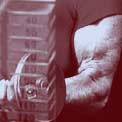
JL: Well, my life was saved by my profession. I was a weak, sick kid. When I was thirteen years old, I developed this terrific habit of eating sugar—my whole life was sugar, sugar, sugar. It destroyed all the B vitamins and affected my brain. I had this uncontrollable temper—tried to kill my brother on two occasions, failing grades, troublemaker in school—and then, when I was about fifteen, the authorities had the doctors take me out of school for six months. I was about thirty pounds underweight and everything was going wrong with me. So there I was, a shut-in at home. One of our neighbors told my mother that there was a lecturer speaking at the Oakland Women's City Club, and this man was a nutritionist who had done wonderful things for people. So my mother—she was a pretty good salesgal—talked me into going. In those days, I was wearing glasses, I was skinny, I had pimples and boils, and I was so bashful I didn't want anybody to see me. But I went to this lecture.
Well, we were a little late getting there and there were no seats available so we started to leave, and the lecturer saw us and said, "Lady with the boy, we don't turn anybody away! Ushers, bring two seats and put them up on the stage!" They put two folding chairs up on the stage and there my mother and I sat, in front of all those hundreds of people. It was the most humiliating moment of my life. I'm perspiring, my little heart's beating, and I just
knew that all those people were looking at me—little did I know then that they all had problems of their own. Well, that guy was so forceful! "My dear friends," he said, "it matters not what your present physical condition is, it matters not what your age is; if you obey nature's laws you can be born again!" Well, I forgot everything! This man said I could be born again! That's what I wanted! I wanted to be an athlete, I wanted the girls to like me, and I wanted to be able to get good grades in school, and this man said I could do all that. Now what did he mean by "nature's laws"? Exercise and eating properly! I went home that night and I said, "Dear God or somebody, I need help." I didn't say, "Make me a Mr. America; make me a straight-A student." I said, "Just give me the willpower to refrain from these foods that are killing me, all this sugar, sugar, sugar, all this processed food." That night, I went strict vegetarian. Then a few days later, I joined the Berkeley YMCA. And you know what? In one week's time, I was born again. Absolutely! I used to have these blinding headaches, I used to pound my head against the wall because I couldn't stand the pain, and my energy was so down and everything was negative—I hated my brother, and my mother, and my dad, and other kids—and in one week that all changed. My folks couldn't believe it! I was actually born again! Now if something saved your life, would you be
enthusiastic about it?
AC: Yes, sir.
JL: Well, that's exactly it. See, if you get all these things together, you get the spiritual, you get the physical . . . I mean, there is so much that we don't know about life, but there is so much that we
do know. And if we put into practice what we know about the spiritual and about the physical, then we've got a
great life, and this is what I try to get over to people—that anything in life is possible.
AC: So what would you say would be a concise definition of "self-mastery"?
JL: Being able to do the things that you believe in your heart you should do. Like being truthful. Being truthful to
yourself. If I would ever lie to
me, I'd lie to you. And if I were to lie to you—I mean, the only thing that Jack LaLanne has got going for him is telling the truth. I've got nothing else going for me; that's it, that's the whole thing. You see, I would never miss a workout, and I would never eat anything that I don't believe in. I'd be cheating!
That's self-mastery; that's control, that's discipline, that's pride. And that's what we need more than anything else—pride and discipline.
AC: And based on your understanding, what is God-realization or enlightenment?
JL: You're speaking about God? Well, especially being in my profession, if you don't believe that there is a Supreme Being, you've got to be psycho—you'd have to be sick! Do you think that man could ever make a calculator like your brain? Do you think that man could ever make a pumping system like your heart? Do you think that man could ever make a filtering system like your kidneys? Do you think that man could ever make a machine that the only way to hurt it is by not using it? I've just bought a new Corvette. Now that car, the more I drive it, the quicker it wears out, right? But how about this God-given machine? The only way you hurt it is
not to use it. You see, you don't get old from age, you get old from inactivity. So that's why I've said a million times—and you've got to believe it—man could have never put together what we have, this human machine.
AC: What do you think the difference is between what you're teaching—which is absolutely positive and obviously has the power to completely revolutionize one's life—and what it is that someone is describing when they say that they've had a powerful spiritual experience?
JL: I have a spiritual experience all the time! When I wake up in the morning, man, I'm telling youI have hands, I have feet, and I praise that omnipotent power that gave them to me, whatever it is. We don't know what it is, but we've got to know that there is some power that's beyond our comprehension. But as I said, what I take into consideration, and what I try to practice, is what we
do know—and what is positive. You know, I was recently on Dr. Robert Schuller's show—I've got to help him, by the way, he's in bad shape; I've got to call him tonight and put him on a good program, nutrition, exercise . . . anyway—when I was on his show, I realized that this is where my profession should be taught, from the pulpit! Catholics, Jews, Muslims, all of them—so much of religion now, what is it? These poor people, they overeat, they overdrink, they don't exercise, they don't take vitamins, they're fat and they're out of shape and they're miserable and they've got arthritis and rheumatism, and then they go to church and they say, "Dear God, please help me." Well, God's not going to do anything for you; God helps those who help themselves! Everything that's ever happened in Jack LaLanne's life—good or bad—
I made it happen. So that's what you've got to tell those people: "You've got to take responsibility for your actions." As I said, you cannot completely control your thoughts, but you can still take responsibility for yourself and guide yourself in a good, positive way.
AC: What is your feeling, though, about the famous declaration of the enlightened person who says, "Thy will be done"—in other words, "It's not my will but the will of a higher power that does everything"?
JL: Well, I don't believe that. I believe that we are put on this earth to do the best we possibly can with what we have. Again, there are so many things that we don't know about—but if I left everything to fate, I wouldn't have anything! I wouldn't be getting to people.
I've got to make it happen! And I believe this with my mind and my heart and my soul: What
can't you do? Anything in life is possible if you
make it happen.
AC: When I was thinking a lot about self-mastery, the simplest way I could think of to define it would be to say that it is the liberation of the "I Can" in the human spirit, because it liberates the individual from all kinds of limiting beliefs and directly reveals to them that, as you say, miracles are possible if we are only willing to act-—
JL: Do you think that all the miracles were in the biblical days? Do you know what we're doing now with people? Why do you think there are more people who are reaching a hundred years old than ever before in history? We're getting these old people out of their rocking chairs, out of bed, eating right, exercising, and
believing in something. Even if you are ninety-five years old, you can double your strength and double your endurance in six to eight weeks—at ninety-five! This is actually the truth! Now if I can double your strength and double your endurance, wouldn't that be a miracle to you? If you are a big fat person and you lose ten or twenty inches off your waist and you get more energy than you've had since you were a kid—that's a miracle. But the point is, we
make our miracles happen.
AC: Have you ever heard it said that in the spiritual realization there is a recognition of "I Am"?
JL: Yes, I've heard that.
AC: Well, some of the great spiritual masters who have experienced this realization say that in the recognition of this "I Am," the individual experiences pure being
—pure being in which there is no doing, there is only being. They realize that they are not separate from everything that exists.
JL: I do that all the time! Like I told you, I thank God—or something—that I'm here! I'm appreciative of this.
AC: Of being?
JL: Of being! Right. Absolutely. But I made that happen because I took control!
AC: Good, so what I want to ask you is this: Some spiritual masters refer to this experience of being
, and this experience of resting
in being, as "enlightenment." And what they believe is that while on the path of self-mastery we strive to become
, on the path to enlightenment we must endeavor to come to the end
of becoming. In order to directly know oneness with all things, it is absolutely essential, they say, that we come to the end of becoming. This is, for example, what the Buddha spoke about. The Self Masters, on the other hand, tell us that in order to be able to realize and express our full potential as human beings, we must strive ceaselessly for greatness. So what I want to ask you is: Who has the right perspective here?
JL: These are just words. All these religious people—why are there so many sick ones? Because they are not fulfilling what they have, they're not working at it! They want something for nothing. They're just like most Americans these days—they want to overeat, overdrink, smoke, and not exercise, and then they go to the doctor saying, "Give me a magic shot, doctor, so I can feel better and look better." They all want that, but as I said, there is a price to pay. Living is tough, it's hard, and most people, especially religious people, spend too much time on their spirituality, hoping that this spiritual thing is going to do something for them. It doesn't work that way! They've forgotten all about honesty and integrity and really getting down to the nitty-gritty.
AC: So what you're saying is that to become truly spiritual, to experience genuine spirituality, you have to really act
—you have to do
something—and you have to be willing to give everything.
JL: Everything! Absolutely, no doubt about it; there are no free lunches. The whole plan about this is that you have the power to do it, but you have to take responsibility. I'm a normal human being, but the reason I'm normal is because I've
worked at it! Like I said, there's a mental side to all of this and you can't separate it from the physical. Too many people dwell on all kinds of negative things, but I work out seven days a week and that's my penance, that's my price to pay, that's to keep my mind down where it should be instead of it running away. See, it's a psychological thing. You're actually punishing yourself, disciplining yourself—it all comes down to discipline. With my personality, I could be a runaway, out with a different woman every night, drunk every night, eating and doing things that—well, you know, you've got it in you, we've
all got it in us. But that's why you've got to take control! So after I've done my workout in the morning, I've fulfilled my obligation, my price to pay for what I have. Nothing happens accidentally; there's always a reason, somewhere along the line.
AC: What about grace?
JL: What about what?
AC: Grace—the descent of the spirit. It's called "grace" when it seems that for no apparent reason the spirit visits someone—then they say it was an "act of grace."
JL: You see, that I can't get into, because that's never happened to me. Everything that's happened to me in my life is because of something that I've done to make it happen. Nobody's come out of the clouds.
AC: It seems—in more ways than one—that for countless thousands you have fulfilled the role that spiritual masters or gurus do in the East, and I think the most impressive thing about you is your willingness to be an example for others. So what I'd like to ask you is this: Are you a guru? And why do you feel that living, breathing role models are so essential on the paths of self-mastery and liberation?
JL: Actually, I never think of myself as a guru—especially getting the home training that I did, what with my mother always talking about being humble, appreciating what you've got, and always pushing yourself down. In fact, I never even think of what I've done. You know, everybody says, "Oh, you did this, you did that," and I say, "Yeah, like the guy who had a million dollars a year ago and today he's broke. What has he got?" You see, I never look back; I only think about today and tomorrow, about my work and how I can help these people. But how could I be an example, and how could you believe in Jack LaLanne, if I didn't practice what I preach?
When I opened my first official health club in 1936, I'd go to Oakland High School at noontime. I'd pick out the fattest and the skinniest kids I could find, and I'd get their phone numbers and addresses and names. I'd go to fifty kids' homes, and I'd sign up fifty out of fifty—I never missed. I'd tell their parents, "I'm going to save this kid's life; he's going to have the greatest life anybody can have, and if he doesn't sign up, he's going to miss out on it." Then I'd tell those kids, "If you wear clean clothes, you're not going to be a follower, you're going to be a leader. I want you to cut your hair, I want those clothes to be neat and clean, and if you get lower than a C grade in school, you're OUT." Come to think of it, I
was their guru—I was their mother, their father, their best friend, their everything. I knew about their sex lives, about how much money they spent, their aches and pains and all their problems. They came to me, I was their consultant, and we were family. And I
worked those kids, I'll tell you—you wouldn't believe it. It's a wonder some of them didn't die!
So that's how I get my reward. Can you put a price on a life? If you can save somebody's life, get that person to reduce their weight or get these older people working out, well, look what you've done—you've saved a life, the most precious thing there is!