Sign Up for Our Bi-Weekly Email

Expand your perspective with thought-provoking insights, quotes, and videos hand-picked by our editors—along with the occasional update about the world of EnlightenNext.

Privacy statement

Your email address is kept confidential, and will never be published, sold or given away without your explicit consent. Thank you for joining our mailing list!


From What Is to What Ought to Be


An interview with Michael Lerner
by Andrew Cohen
 

interview

ANDREW COHEN: In an interview in this issue of What Is Enlightenment?, social scientist and evolutionary activist Duane Elgin states, "What we're really facing is the convergence of a number of powerful trends—climate change, species extinction, the spread of poverty, and the growth of population. All these factors could develop individually, but what's unique about our time is that the world has become a closed system. There's no place to escape, and all of these powerful forces are beginning to impinge upon one another and reinforce one another. Our situation is something like a set of rubber bands that you stretch out and out and out until they reach the limit of their elasticity, which is the breaking point of the system. . . . Something powerful is going to begin happening at that point, and while right now we can turn away from this, in another twenty years a systems crisis will be an unyielding reality that we will have to deal with." Elgin, you, and many other activists who speak out passionately about the crisis that we are in repeatedly state in no uncertain terms that it is not technological innovation but only a spiritual transformation—a quantum leap in perspective based upon spiritual insight alone—that will have the power to change the hearts and minds of human beings significantly enough to be able to bring to a halt this suicidal game of Russian roulette that we are playing with the fate of the planet and all life upon it. Indeed, the theme of your recent book Spirit Matters is that it is our individual and collective alienation from ourselves, from our own spiritual depth, that is the fundamental cause of the narcissism, shortsightedness, and rampant materialism that is bringing us to the brink of self-destruction. Could you please explain why you feel that it is our lack of spiritual realization, individually and collectively, that is the root cause of all that is wrong, not only with our relationship to ourselves as human beings but also with our relationship to all of life?

MICHAEL LERNER:
I'd start by saying this: The fundamental reality of the universe is that we are all interconnected as part of the unity of all Being. And the alienation that we experience is first and foremost an alienation from who we are. It is a product of our failure to understand ourselves as connected to all other human beings and then to all other beings. That failure manifests in a zillion ways in contemporary life, but it's the root of the problem because every specific form of alienation is rooted in our distance from or our lack of awareness of our fundamental interconnection with all other beings.

If we want to look at some specifics around that, we can talk, for example, about the ecological crisis—the way that we imagine that we can dump pollution into the world and that it won't affect us. Or, in a more sophisticated version of this stupidity, we imagine that we won't dump the pollution into our particular part of the planet. We'll dump it into the Third World, not recognizing that we're part of one world system, one planetary system, and one universal system. So this is symbolic of the craziness that comes from not understanding the interconnection—because the poisons come back to us. They come back to us through the food. They come back to us through the air. They come back to us through the interaction with other human beings who have become sick as a result of the impact of the pollution and environmental destruction that we are engaged with. But we are unaware of this, or we're unable to see it.

It's as if we were to say to ourselves, "Well, this is only my toe. It's something far away. I don't really see it as connected to me. I'm up here in my head, or I'm up here in the upper part of my body." Well, if somebody said that to you, you'd say, "No, no. That's my toe. It's really important to me, even though it's not exactly in front of me in my immediate consciousness. But if you start to hurt it, of course, it will hurt me." We are part of this universal body of the universe, and yet we've cut off our awareness of some of our nerve cells so that we don't respond immediately to the stimuli coming from other places. But eventually the poisons come back to us in a very hurtful and destructive way. There's massive irrationality in our not recognizing the interconnection and the interdependence of all human beings and, fundamentally, our interconnection to all Being. So that's on the ecological level, that fundamental alienation from our recognition of the interconnection between all human beings.

On the social level, the same thing is playing out, just in a slightly different way. Were we to understand our fundamental interconnections, we would recognize that our own well-being or the development of our soul and consciousness is totally dependent on the development of every other human being on the planet. That is to say that we're intrinsically linked, that the image of us as individuals pursuing our own self-interest or even our own enlightenment is deeply mistaken. But when one doesn't recognize that, then one thinks, "Oh, I can pursue my own path. I can make it for myself, and it doesn't really matter what's happening to these other human beings around me." And that alienation from other human beings causes so many of the social problems that we're facing, because people imagine that they are on their own when, in fact, they're deeply interconnected with every other human being, not just at the physical level that I was talking about with regard to ecology but at the emotional and spiritual level, the level of our expectations of what's possible between human beings. Our capacity to connect with other human beings—every single interaction that we have—is shaped by our consciousness of the totality of human relationships. And in a world where human relationships are based on a model of each one out for herself or himself, the distance between us is dramatic, and the possibility of loving connection is deeply reduced.

When the understanding of our interconnection is lost, people start to proceed in a way that I'd say is analogous to the misunderstanding that happens with a cancer cell. The cancer cell, the cell that pays attention to its own interest without regard to the other cells around it, starts to consume more and more and more. So it's not surprising that cancer really is the quintessential sickness of the contemporary age. As a society, when you suddenly see this as becoming the major form of illness, it's a dramatic symbol of something happening in the universe. And what is happening is that one tiny little part of the universe—us—has started to get out of control. We do not understand our interrelationship with all other beings and are consuming everything around us in an incredibly destructive way. We do that on the ecological level. We do it on the social level. We do it on the individual level.

AC:
What is unique about your thesis is its rare combination of radical and uncompromising politics and the profound common sense of deep humanism, all grounded in a passionate and inspired spirituality. Many people today who are deeply devoted to spiritual awakening often shy away from the kind of committed and passionate engagement with the world that you repeatedly emphasize is absolutely essential in order for the ever more dangerous world we're living in to actually change in the ways that count the most. Why is it that you feel that committed engagement with the world is the most important part of living a truly spiritual life?

ML:
Because, as I've been saying, a deep truth of spiritual consciousness is the recognition of our interconnection with all others. There is no way to actually be alive, spiritually alive, and not care. In fact, most spiritual traditions have that element of developing a sense of compassion and caring for the well-being of all others. Now, what I have been stressing is that that consciousness is sometimes isolated from practice, from how we actually live. It's a consciousness in which we can say, "Oh, yes. I feel compassion for all others," but that doesn't lead us to do anything about their situation. And I would argue that that disjunction—compassion for others without wanting to act to alleviate their suffering—is not a product of an enlightened consciousness, but it's a product of somebody who feels defeated about the possibility of healing and transforming the world.

The particular form of spirituality that I come from is the Jewish spiritual tradition. And that tradition has something to add to the spiritual consciousness of the universe. It contributes the insight that the fundamental spiritual force in the universe is a force of healing and transformation. It is a force that makes possible the transformation from that which is to that which ought to be. That is to say, the universe is not morally neutral. The spiritual power of the universe is not a morally neutral force. It is a force that inclines the world toward goodness, toward generosity, toward compassion, and toward an alleviation of unnecessary suffering. The God of the Bible is a God that says that the world can be based on love, that it can be based on caring—love your neighbor and love the stranger—that the world can go in that direction, that that can happen. And not because of some transcendence of all that is, but because the fundamental spiritual reality of the universe is that it is pervaded with love and goodness. And if you are a realized human being or moving in that direction, then your test is to be a witness to that possibility, to be a partner with God in the healing and transformation of the world. This is what it means to say that human beings are created in the image of God: We are meant to be partners, and our task is to actualize more of the goodness and love in the universe and to recognize the world as potentially transformable.

What I say is that spiritual traditions that don't go in this direction, that think that it's sufficient to understand the universe with a detached compassion, are often based on a defeatism that I think is a despair about the possibility of possibility. To believe in God, from my standpoint, is to believe in the possibility of possibility. God is the force that makes possible the transformation from that which is to that which ought to be. So when a spiritual person testifies to the possibility of transformation, that testimony isn't simply about writing a book; it's about acting as though the world really could be based on love and could be based on caring and could be based on this active recognition of the unity of all Being. So that leads us to action, to trying to heal and transform the world.

AC:
You said that the Jewish tradition is based upon the fact that in the spiritual revelation, the spiritual energy in the universe is recognized to be a kind of evolutionary movement from, as you said, "that which is to that which ought to be." But is what's recognized in the tradition the absolute truth, or the true picture of reality as it is? I personally agree wholeheartedly with what you're saying, but there are many people who would question whether, in the universe itself, there is any inherent movement of spiritual and evolutionary energy toward, as you were saying, the expression of goodness.

ML:
There are different ways of experiencing the spiritual reality of the universe. People come down from the mountain with different accounts. And what I can do is to testify to the way that I and my people have experienced it. I don't want to say to anybody else, "Your account isn't a legitimate account," but I want to explain, from my perspective, why it might be that others don't seem to see it in this way. You see, the way of experiencing the universe that I'm talking about is one which is very hard to hold on to. Because once you come down from having had the experience that the world is potentially transformable, you enter into a world in which there are elites of power and money who have kept their power and money in part by convincing everybody that the only way things can be is the way things are and that there is no fundamental transformation possible. You see, unlike other spiritual insights, the insight into the transformative nature of the world is connected with terror—because every social institution, including one's own parents, is committed to convincing you that the world can't be changed very much and that your task is to fit into a particular reality and make it within that reality. And so, given that, I don't blame anyone who is on a spiritual path and hasn't allowed herself or himself to get into this particular aspect of spirituality.

AC:
So what you're saying is that the revelation of the inherent goodness of the spiritual energy that moves and ultimately is this universe is revolutionary in nature. It's a revolutionary recognition that always threatens any perspective or fixed position that would inhibit its full or complete flowering.

ML:
Exactly. Because its full flowering would lead to a clash with almost every existing religious system, including Judaism, and a clash with all of the rest of the social structures of the society. And I'm not just speaking about economics. For example, so much of what is taught in the universities is theories that tell people to look at the universe in ways that convince them that nothing fundamental can be different, that the world is stuck where it is. All empirical social science and a great deal of the humanities are based on the defeated consciousness, the consciousness that says that nothing fundamentally can be healed or transformed. In fact, in humanities, very often you encounter the following kind of position: "If you're really sophisticated, then you know how much evil there is in the world and how impossible it is to fundamentally change anything. If you believe something different than that, you're just a breathless teenage girl who hasn't yet grown up, who hasn't become a mature adult, who hasn't really fully understood the implications of evil in the universe!"

AC:
How hopeless things are.

ML:
Exactly. So, this ideology runs very, very deep.

AC:
You speak about a deep cynicism in the hearts and minds of many contemporary Americans at this time of crisis. Would you please explain what the causes are of this cynicism, this postmodern curse that is like a shadow over the human heart, preventing its opening to the call of the true Self to transcend ego and selfishness?

ML:
This cynicism is manifest in what I call a pathogenic belief. Now, in my book Spirit Matters, I describe this pathogenic belief as the belief that no one else really shares with us our spiritual understanding. And that, consequently, we will necessarily be alone if we go out into our daily lives and say that the world could be based on this spiritual reality of the universe. So no matter how many millions and millions of people are moved to spiritual understanding—and they'll read What Is Enlightenment? or Tikkun magazine—no matter how many millions of people have this spiritual hunger, almost all of us share a fear that we are the only ones who really believe this, who really would want a world based on love and caring, based on awe and wonder. Because of that deep belief, we all act as though we have no alternative but "the real world," that is, the world of making a living and our daily life outside of the few moments when we're meditating or praying or doing religious or spiritual activity. We believe that in the real world, this spirituality has no real application, and that, in fact, were we to bring our spiritual understanding to the rest of the world, we would be ridiculed; we would be put down. All of the credibility that we had managed to build up for ourselves in order to become professionals, in order to be successful in the world of business, in order to have good employment—all of this would be vitiated were we to say that we really believe that the world could be transformed and healed and based on our higher spiritual understanding.

That's the belief. But why is that so deeply ingrained? Well, it's deeply ingrained because at various moments, given that this is shared by most people in the society, when you as an individual try to peer out and see, well, where are my allies, you see all these other people acting on their pathogenic belief, acting as though all they care about is their own self-interest and maximizing their money and power. So what actually ends up happening is that each of us becomes the other to all the others. We are the ones who enforce the reality on each other.

[ continue ]


Subscribe to What Is Enlightenment? magazine today and get 40% off the cover price.

Subscribe Give a gift Renew
Subscribe
 

This article is from
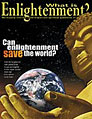
Our Save the World Issue


Advertisements


» Advertise with us