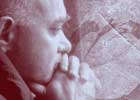
Roshi Bernie Glassman
WIE
, states, "What we're really facing is the convergence of a number of powerful trends—climate change, species extinction, the spread of poverty, and the growth of population. All these factors could develop individually, but what's unique about our time is that the world has become a closed system. There's no place to escape, and all of these powerful forces are beginning to impinge upon one another and reinforce one another. Our situation is something like a set of rubber bands that you stretch out and out and out until they reach the limit of their elasticity, which is the breaking point of the system. Something powerful is going to begin happening at that point, and while right now we can turn away from this, in another twenty years a systems crisis will be an unyielding reality that we will have to deal with."
And cultural historian Thomas Berry, in his new book The Great Work
, states, "We find ourselves ethically destitute just when, for the first time, we are faced with ultimacy, the irreversible closing down of the Earth's functioning and its major life systems. Our ethical traditions know how to deal with suicide, homicide, and even genocide; but these traditions collapse entirely when confronted with biocide, the extinction of the vulnerable life systems of the Earth, and geocide, the devastation of the Earth itself."
Roshi Glassman, you're a Zen activist, a passionate
Zen activist. For many years you have been responding in very practical ways to the immense suffering that you have seen in the world around you. Ethically and spiritually, how should we deal with this crisis? What, in your view, is the appropriate attitude for us to cultivate in order to come to terms with the ultimacy that Elgin and Berry so graphically describe?
BERNIE GLASSMAN: You know, Andrew, I'm basically a simple person. The way I look at the issues you're talking about, which are issues of the globe, is to bring it back to our own bodies. My understanding is that we are all interconnected. But it's not so easy to think that way—so I like to talk about it in terms of our own bodies. Because in a way, all those issues that you talked about for the planet are constantly happening within us, within our own bodies. I have diabetes and prostate conditions, and if I look at it, it could be extremely overwhelming. I mean, I could say, "Well, I can't do anything about it." And yet, if we don't do anything about it, we die. So the point is, we
do do something about it! We do something to the extent that we can see clearly. If my hand is bleeding, I can't sit around watching it just bleed and say, "I don't know what the hell to do." If your hand is bleeding,
you're going to do something about it. If you don't have a bandage, maybe you'll have to just suck the blood with your own mouth or tear off a piece of your shirt to use as a bandage. You're going to do
something. You clearly don't just sit there and think, "Is that me bleeding?" You
do something.
So for example, if I see
myself on the streets as a homeless person or as somebody who's defoliating the forest, I'll say, "That's
me doing this, so what can
I do about it?" I'll do what I can. That's my only answer. I don't have any solutions, because
I don't know. That's the first tenet of our Peacemaker Community. We may have lots of tools—knowledge, languages, equipment, whatever—but we approach
every situation from the standpoint of not knowing. That means being completely open,
listening. And then doing whatever we can do. Not saying, "I don't have enough money. I don't have enough knowledge. I don't have enough enlightenment. I don't have . . ." But saying, "Here's what I do have"—and then doing the best actions that we can. That's what drives me to keep working in all these arenas. When we step back, we can just say, "It's overwhelming, you know—it's all going to fall apart." Yes, it
is all going to fall apart. But, in the meantime, this is what
I'm going to do.
AC: So you would say, "Abide in a state of not knowing and do the best one can"?
BG: Yes, approach the situation in a state of not knowing. Then
bear witness to it. Try to
become it, and out of that, I believe,
automatically will come the right actions. Those actions are loving actions just like the action of trying to stop our own hand from bleeding. That is, they will arise
automatically.
AC: You're saying that if we bear witness, if we face the suffering, if we truly face it, then there's going to be a natural response?
BG: I'm sure of it. I've seen it happen over and over again. But if we're trying to
solve issues, then we'll be trapped.
AC: Because we don't have the capacity to do that?






 printer friendly
 email the editors
 advertise
 reprints