Sign Up for Our Bi-Weekly Email

Expand your perspective with thought-provoking insights, quotes, and videos hand-picked by our editors—along with the occasional update about the world of EnlightenNext.

Privacy statement

Your email address is kept confidential, and will never be published, sold or given away without your explicit consent. Thank you for joining our mailing list!


The Back of the Synagogue Is Not the Back of the Bus


An interview with Tamar Frankiel and Esther Kosofsky
by Amy Edelstein
 

WIE: In Judaism, is God male or female?

ESTHER KOSOFSKY: In Judaism, we're not supposed to have any image of God because God is beyond human form. I don't view God as male or female, even though I may say "he." In the Torah, when it says, "And God spoke," it's put in a masculine form, but the word "God" is really genderless. The Torah was written in Hebrew, the language of God, and one of the beauties of Hebrew is that everything is gender-oriented; there's no nongender. Every word is a masculine word or a feminine word, every color is a masculine color or a feminine color, every number is a masculine number or a feminine number. It's either one or the other. When we talk about a chair, we use a masculine pronoun for the chair. Does that mean the chair is masculine instead of feminine? No, and we don't ascribe human qualities to a chair. I'm not comparing God to a chair at all. My point is that the Hebrew language forces us to choose one gender or the other. If Hebrew had an "it," that might be what God would have used, but God chose masculine and it's never bothered me.

WIE: In the Talmud [Rabbinic commentary on the Torah] it is said, "What is characteristic of men is not characteristic of women and what is characteristic of women is not characteristic of men," and in Orthodox Jewish life, men and women have very distinct roles to fulfill. What is the significance of having these separate roles for men and women?

EK: I view it as almost like an orchestra, where every piece has its own role. If they all play the best that they can, understanding that they're only a part of the orchestra, then together they will make a wonderful concert. There is a beauty when everyone understands what their own strengths are and when their strengths are called for. I think when you are confident enough in where you are, who you are and what your role is, you can appreciate the strengths of the other gender. You do what you do well and they can do what they do well. There are differences that we can't ignore—in the way we were created and how we react. We're better suited for different roles. But I think what is most important is having confidence in knowing that I have to be the best that I can be within my limits, knowing what my limits are and accepting them and growing within them. That takes great strength and understanding. Then you can have a completeness of the genders. If you're going to think, "Well, it's not fair that I can't do this," or "I have to do that," then no one wins.

WIE: The prevailing view today among contemporary men and women is that there shouldn't be any differences between the sexes, that through the women's liberation movement, we've discovered our fundamental equality and now we can finally put the archaic bonds of patriarchal traditions behind us. This view holds that any religious tradition that advocates separate paths for men and women, if looked at carefully, is really designed to keep women in the position of second-class citizens. Feminist religious scholars such as Rita Gross say that the ideal woman in Orthodox Jewish culture is meant to adhere to the same role that has kept her oppressed throughout history, that has stunted her capacities and her ability to contribute to the world. I'd like to ask you what you think about some of the arguments that are used to support this radical feminist view that Judaism is really one of the worst patriarchal offenders. I hope it's not too much, but I have five points that they raise that I thought I'd ask you about all at once. Okay, here goes! Why is it that of the 613 commandments of the Torah, only a small fraction are considered essential for Jewish women to observe, while men are required and also privileged to follow them all? Why is it that one of the most revered commandments, chanting from the Torah, is reserved for men only? Why is it that the spiritual leaders, the rabbis, are all men? Why do women sit in the back of the synagogue? And why do Jewish men say a prayer every day thanking God for not having made them a woman?

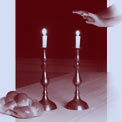
EK: I was waiting for that one! But let me start with your first question. We can't just say, "I do eight mitzvot [commandments]," or "Well, I do twelve," or "Oh, I do a hundred and seventy-two." You walked in today and smiled; you know, that's a mitzvah. You were pleasant to someone else. There are very few mitzvot that men do that women cannot, and there's a practical reason, not a spiritual reason, why women don't do the others. What are the mitzvot that women are responsible for? For the kashrut [dietary laws] and the home. That's a huge role. It's not just being the cleaning lady and the washerwoman. It's a big thing, making sure that the fuel we put into our bodies, which gives us the energy for our lives, is the food that God wants us to have. Women light the Shabbas candles, and although it's incumbent on both the man and the woman, why would I not want to do it? It's a beautiful mitzvah. Why would I deny myself a commandment that brings spirituality and warmth into the home?

Women today say, "It's not fair, I want to wear tefillin [phylacteries, ritual prayer ornaments] because, as it's recorded in the Talmud, this great Rabbi's daughter wore tefillin." My response to that is: When you've done everything you can as an observant woman and you still want to do one more thing, fine, then you can take that on—but in the privacy of your home where you're doing it because of you and God, not because you're doing it to show other people that you can. If you're going to do an act just to be defiant, then there's nothing to it. There's so much meaning behind these things, it's not just the act. You see, it's not about equality, it's about understanding your role. My father's always said, "Why should women be equal? They'd have to come down a level to do that."

WIE: Did he mean that women are seen as being better or more spiritual than men?

EK: Yes, women are viewed differently. Men wear a yarmulke [skullcap] on their head as a constant reminder of God's presence. The Yiddish word yarmulke means "fear of heaven" or "fear of the king." Women don't have to wear one because women have a natural understanding. Similarly, circumcision is a physical sign of a bond between man and God. Women don't need a physical reminder that God expects certain things from them because they are born with a spiritual sensitivity. These explanations come from the Talmud; they weren't just thought up to counteract modern society.

WIE: Some feminist scholars would say this kind of explanation is a rationale for keeping women down, denying them privileges like reading from the Torah. What do you think?

EK: You know, it's like when you buy a new appliance that you have to assemble. If you go to instruction number twelve and it says insert slot A into hole B, you'll say, "I don't know what sense that makes. This is a dumb machine!" and you'll take it back. Whereas if you said, "I want to use this machine—let me go step by step and then I'll understand," when you come to step twelve it'll make sense to do what they tell you to do. If you're going to approach Judaism by saying, "Okay, let me check everything along the way and make sure everything makes sense to me, and then I'll believe in God. Then I'll accept this spirituality and grow with it," you're going to find problems. I wouldn't mind if some things were different. But if you accept the work of God and the word of God and that He treats us as equal in many respects and greater in some, then maybe I wouldn't mind putting on tefillin, but I don't need to identify myself any more strongly as a Jewish woman.

WIE: Why is it that women are relegated to the back of the synagogue, separated by a screen from the place where the Torah is read? And why don't women have their own version of the men's prayer—"Thank you, Lord, for not making me a man"?

EK: Well, the back of the synagogue is not the back of the bus. Our modern view is to think that the back of the . . . is bad. It's just separate. When it comes to prayer, you have to ask: What is your purpose? The purpose of being in a room with other people praying, rather than praying by yourself, is that the prayers of the many will help generate your prayer up to God. If you're distracted by other people, then not only are your prayers not going up, but you're dragging other people down. So, at the time of prayer we sit separately. You can feel that you're participating even if you are separate—I'm not going to make a blanket statement that Orthodoxy is bad or observancy is bad because women are relegated to the back. The synagogue rituals revolve around men, and the role of the cantor and the rabbi are male roles because of the rules of modesty and practicality. It's not considered modest for women to sing in front of men because, as I mentioned, when we're praying we want to make sure that we put our attention upward, not sideward. So a woman rabbi or a woman cantor is an issue. [The rules of practicality come from women's childbearing role, which exempts them from certain time-bound commandments.]

You asked about the morning prayer that men say. It's part of a whole series of morning blessings where we thank God for everything he's given us—for giving the rooster the wisdom to crow so we'll know when to get up; for giving vision to the blind because when we're sleeping, we're as if we were blind; for giving us strength, clothing, etcetera. Then the final three blessings are a progression—we're thanking God for the ability to serve him as much as we can. We thank God for not making me a non-Jew. We thank God for not making me a slave. We thank God for not making me a woman.

You see, non-Jews were given seven commandments, the universal laws of mankind. So we thank God that he made us Jewish so that we have more than those seven. Jewish slaves were exempt from certain commandments because they could only do the commandments that would fit into their master's schedule. Then there's one more group that has fewer commandments than men, and that's women. So men say, "Thank you for not making me a woman so I can have even more commandments to do." This is the rationale, and it suits me okay. But even if it wouldn't, I'm not throwing away the tapestry because of one misstitch. It's not enough to make me say, "Well, how chauvinistic, if that's in there I can't accept anything." Why can't I accept everything? So my prayers in the morning go a little quicker because I skip out that line and a half. It's one of those things that gets so much attention—it's as if it's in twice as big a font as everything else in the prayer book. But, I know, it makes for good conversation.

WIE: In Judaism, the women's spiritual role centers around the family and home. Can you still fulfill your potential as a Jew if you're not married and don't have children?

EK: There is a great bent in Judaism toward marriage and children because we have a responsibility for the next generation. It's not that a person who's not married is doing anything wrong—if you haven't found your soul mate yet, that's not a problem. There are other ways you can continue to grow. Study on your own is also a wonderful thing. But a person whose goal is, "I never want to get married and I never want to have children," needs to rethink what their priorities are because otherwise something will be left unexpressed.

WIE: Andrew Harvey, a well-known gay spiritual thinker and author, writes that in many traditions homosexuals have been especially revered as visionaries and priests. "Homosexuals," he states, "were seen as sacred, people who, by virtue of the mysterious fusion of feminine and masculine traits, participated with particular intensity in the life of the Source." Tamar Frankiel told me that homosexuality is considered an abomination in the Torah. What do you think of Andrew Harvey's statement that homosexuals may actually be more open to the call of God?

EK: I can only speak from the Jewish viewpoint. In the Torah, the most sacred group, the Cohenim, or priests, were required to be married. The Cohen HaGaddol, the high priest, could not perform the most important service of the year on Yom Kippur if he was unmarried. If there happened to be a high priest who wasn't married, that service wasn't done. The Torah states that homosexuality is something that's not condoned, so in Judaism, there really is no place for looking up to that type of lifestyle.

WIE: Tamar Frankiel was a feminist before she became an observant Orthodox Jew. One of the things that had attracted her to Judaism was that many Orthodox Jewish women she met seemed to have a self-confidence that many women who were in the women's liberation movement didn't have. It's a little ironic that the Orthodox women seemed stronger to her, in light of the fact that so many feminists see Judaism as a patriarchal religion where women are treated like second-class citizens—where men are seen as having all the privileges, like studying and praying, while women are relegated to the home, to raising children and baking bread.

EK: Even in my childhood, I never felt that feeling of "second-classness." My father would study Talmud at home and he'd say to me, "Come, let's do this together"—studying with a girl, whoever does such a thing? But I never thought it was strange. My father always accepted us as intellectual people with whom he could have any kind of discussion, and he expected an intelligent response. My mother was the same. You know, I bake my own challah [braided bread] because it's something I enjoy doing. It's not because I'm forced to do it. Some people because of their own unease feel, "If you're baking challah, it's because you have to, and isn't that terrible! You're so downtrodden!" They think that they would feel downtrodden, but the nurturing in my family was and is amazing. I've never had the chance to feel downtrodden.

WIE: That's very unusual. It's so common for women to have been made to feel "less than" or "not equal to" in so many ways.

EK: Right. But I think there gets to be a time when we have to get over it. You know? I'm serious. You were teased in the second grade—you've got to let go of it sometime. When I was young, maybe I thought I wasn't given the same opportunities, or I felt like I was in the back of the bus every time I went to synagogue. So, I say let me study and learn, and maybe I'll find out that it's really not the way I thought it was then. It's a lot easier to grab on to something like that and use it as a way to explain why you haven't progressed. Make the effort to understand or try it for a while; really learn about it. For every Talmudic quote of a rabbi who said, "Don't talk to women," we can find three quotes exalting women. We can find the matriarchs, we can find role models. There are plenty of examples if we want to look in the proper way.

WIE: It's said that in the time of the final redemption, when the Messiah comes, he will be a son of David, a "ben David." Do you think it's possible that the Messiah could come back as a woman, as a daughter of David?

EK: I'm more concerned with bringing the Messiah then being the Messiah. People think, "Who, me—the Messiah? I don't think so!" But it gives a lot to people to think, "I could help bring the Messiah." It's a lot more helpful than worrying about whether it can be a ben David or a bat David [daughter of David]. The reason that we say ben David is that the Messiah is called "the king," and by Jewish tradition, a human king is a man. So to me, that's pretty much set in stone. But the Talmud also tells us that it was by the virtues of the women of the generation of Moses that we merited leaving Egypt, and that by the merit of righteous women today, we will merit the Messiah. So I think it's better for everybody to be concerned with that; there's a lot of power in a statement like that!


Subscribe to What Is Enlightenment? magazine today and get 40% off the cover price.

Subscribe Give a gift Renew
Subscribe
 

This article is from
Our Gender Issue


Advertisements


» Advertise with us