I'm Not Here to Audition!An interview with Susan Powter by Susan Bridle
introduction
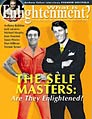
During one of our discussions while researching this issue of What Is Enlightenment?, one of our editors, a man, asked, "When you were five years old, did you want to be enlightened, or did you want to be Superman?" The three men present immediately and enthusiastically exclaimed, "Superman!" I and the other woman in the group shrugged and looked at each other blankly. We simply couldn't relate. It was as if they were speaking another language; the meaning just didn't penetrate. When we told the men about our experience, they said, "Okay, well, what about Wonder Woman?" We were still unmoved. Even though, as young girls, we had been offered a politically correct superhero with an hourglass figure and long flowing hair, we both knew that we had never identified with her. We had never aspired to leap tall buildings in a single bound, to be a defender of the weak, to be a hero, to be a master of the universe. This Superman conversation is one that we two women reflected upon a lot while working on this issue of WIE, for it somehow seemed to shed light on the difficulties we were encountering in our search for women who boldly exhibit the character, characteristics and overall panache we had come to identify with self-mastery. While there are, of course, extraordinary women who excel in many fields of endeavor, we found few women who are specifically interested in the pursuit of self-mastery, and who are committed to the kind of discipline, independence and confidence that it involves. In many cases, we'd come across women who had achieved unusual excellence and mastery in, for example, a particular sport, and who were astounding in their commitment and courage in breaking through limitations of all kinds, but who nevertheless didn't speak about their achievements with the confidence, charisma, independence and power that their male counterparts did. That's why we were delighted when we first discovered the outrageous, outspoken health and fitness crusader Susan Powter. She does, without question, exude the confidence, charisma, power and seize-the-reins-of-your-life self-determination that we had identified as central to self-mastery. In the years since she began teaching her unique brand of renegade aerobics in Dallas, Texas, after turning her own life around and losing 133 pounds, she has experienced a meteoric rise as one of America's most compelling motivational speakers, writing six books—three of which were New York Times bestsellers—creating a series of enormously popular infomercials, appearing as a regular guest on ABC's Home show, developing both a television and a radio talk show, and giving standing-room-only lectures and seminars all over the country. Powter has re-created herself and her life again and again and has learned many hard-earned lessons well. With warmth, humor and bravado, she shares her tales with other women looking to transform and empower their own lives. An unusual energy, zeal and, as she puts it, a "one hundred percent raw-to-the-bone honesty" bursts out of her and emits a kind of shock wave that envelops everyone in the vicinity wherever she goes. In her books, videos or wherever you may encounter her, onstage or off, she tells it like it is, no matter the consequences. In a world where men and women so often live in thrall to the opinions of others—women perhaps especially so because they may have more to lose—her guts and candor demonstrate a dynamic and refreshing freedom. And while her in-your-face style has been known at times to irk or offend, millions of women have found her message and example a positive, uplifting and empowering force in their lives. Indeed, as I learned more about the impact of her work, it occurred to me that in some ways, Powter was sort of a nineties version of Wonder Woman—albeit with a bleached-blond buzz cut. When I finally got the opportunity to speak with her, I was very eager to find out if Powter really was the Self Master she had appeared to us to be. I was also curious to discover the source of her high-voltage inspiration, passion and positivity, since to us this has been one of the most intriguing questions in our investigation into the relationship between self-mastery and enlightenment. Her emphatic answer to my first question set the course for the entire interview to follow: "I would never use the word 'mastery.' I have no respect for that term. I think it is very male and very arrogant. I don't think that there is any such thing as a master. I mean, 'master' suggests that there is something under you—usually a slave. It's the mastery of the world that has gotten us into the mess we're in! . . . This needs to be said because it's a different perspective; it's a female perspective." While Powter's visceral response to the word "mastery" wasn't entirely a surprise—we had by this point come across the same sentiment among women (and particularly feminists) many times before—her disdain for the idea of "self-mastery" and all that it connotes, including discipline, self-control, willpower and decisive action, was incongruous with her no-nonsense and in fact quite decisive and disciplined approach to weight loss and fitness. "Well, we're off to an interesting start," I thought, only one question into an interview focused entirely on the relationship between self-mastery and enlightenment. One of the two central concepts of our dialogue was clearly a red flag to a woman who, although her claim to fame is as a diet and fitness guru, has in recent years become increasingly known for her commitment to feminist consciousness-raising and the activation of women's consumer, social and political power. Thankfully, the ever practical Powter agreed to use the term "self-mastery" for the sake of the interview—but creatively suggested that we cross out the word in print whenever she used it. And as for enlightenment, transcendence, God or Divine will—the other half of the central question of this issue and, of course, the focus of our entire magazine—I soon found out that we were in equally tricky territory. "The nice, blanket, politically correct way to cover God is to say, 'however you choose to describe it.' But somebody needs to start talking about the truth, which is the fact that God is inevitably always referred to as 'He,'" she insisted. "The only God that you are really allowed to find is male. . . . Surrendering to a higher being is slavery!" Powter's spirituality is staunchly immanent and earthly. Her passion for the symbols of birth, blood and dirt is effusive and her rejection of ideas associated with traditional religions fierce. Needless to say, I quickly discovered that both terms central to our discussion were loaded, which made for interesting navigation as well as true-to-form Powter fireworks. Much as Powter dislikes the term "self-mastery" and would never apply it to herself, her message often rings with the "just do it" self-mastery theme. "If you want to be fit, there's no magic. There's no mystery. . . . There is no fairy godmother who comes down and taps you on the head," she says adamantly. "You have to get up and work your ass off—literally. . . . Laziness doesn't fly. It does take work and it ain't easy—but man, the rewards!" She doesn't for a moment buy self-pity or victimization as an excuse, and has no patience for approaches that encourage lengthy psychologizing before simply getting on with the work of making the changes we have determined to make. And, like the other Self Masters we spoke with, she has a voracious appetite for life. She transmits an unbridled "Yes!" a boundless "More!" But unlike other Self Masters, Powter is vociferous in insisting that she not be cast as a role model or as an example of someone who lives by the principles she speaks about. Where Jack LaLanne says, "How could I be an example, and how could you believe in Jack LaLanne, if I didn't practice what I preach?" and Anthony Robbins freely acknowledges the importance of his own example to the credibility of his message, Powter exclaims, "I do not see myself as an example to anybody for anything. I think that is arrogance at its best. That is obnoxious; that is so offensive." Despite the unavoidable fact that she is a very visible and vocal example of self-transformation and empowerment for many, many people, she insists, "I'm a forty-one-year-old mother of three, schlepping through the day every day. . . . I'm just a housewife who figured it out and started talking with other housewives. . . . No, I would never call myself a 'role model.'" So . . . is Susan Powter a Self Master? Well, yes and no. Although she's clearly the master of herself in many ways, her feminist philosophy seems to be at odds with, and to prevent her from fully embracing, that role. It would appear that Powter, in spite of the heroism she has demonstrated in a number of areas of her life, never aspired to be a superhero, to be Wonder Woman. The deepest reasons for so many women's visceral aversion to this kind of strength and responsibility are a fascinating subject, perhaps to be further explored in a future issue of WIE. But for this issue, we are pleased to present the gale force musings of our reluctant Self Master, Susan Powter. interview WIE: While in your books and talks you don't necessarily use the term "self-mastery", I think it would be fair to say that self-mastery is one way to describe an important dimension of your work. I'd like to start by asking you how you'd define "self-mastery". Susan Powter: I would never use the word "mastery." I have no respect for that term. I think it is very male and very arrogant. I don't think that there is any such thing as a master. I mean, "master" suggests that there is something under you—usually a slave. It's the mastery of the world that has gotten us into the mess we're in! So, no, I would say "igniting." I would say "getting awake." Going from sound asleep to wide awake. Going from unconscious to conscious. I see an opening, literally, of eyes and heart and mind and body and all of it. That is very loving, and a very different approach than the "mastery" of anything. What I do know is that there may be a master-ing of some art, like a discipline. And master-ing always suggests that it's only momentary because as soon as you get to one level, hopefully you'll want to go immediately to the next—which means you haven't mastered that next level. So "mastery" is really a joke. This needs to be said because it's a different perspective; it's a female perspective. I see it as birthing. I have three children, two I've birthed and one I've adopted. The only mastery at that moment when a ten-pound human being is coming through your vagina is surrendering to nature and to what is normal and right. There is no mastery in that. There is just a letting go. So "allow" is a very different word than "master." "Open" is a very different word than "control." And these are words that I live. I don't just use them in books. But whether you want to be a Zen master or a master of anything—I don't really care what it is—it's all in the practice. It's in the discipline of doing something over and over, in repetition. It doesn't matter what practice—whether you're talking about exercise or about being a Zen priest. It's in the practice that you get there, that you get all the rewards. And so, repetition is a good word—a real bottom-line word. That means more to me than mastery. WIE: Yet it is precisely these qualities of discipline, practice and repetition that are traditionally seen as central to mastery or excellence. SP: Well, there are two things that I do that most people don't know about—I do photography and I knit, and recently I spoke with a brilliant photographer and I asked him, "How do you get great at this? I mean, I don't just want to be really good, I want to be exceptional." He looked at me and said, "Take pictures. If you want to be a great photographer, photograph." If you want to be a great knitter, knit. If you want to be a great writer—didn't Virginia Woolf say it?—"write." And if you want to be fit, there's no magic. There's no mystery. You have to get up and work your ass off—literally. If your butt is eight feet wide, you've got to work it off. And you're not going to feel like doing it. I speak about this all the time. There is no moment of magical motivation. There is no fairy godmother who comes down and taps you on the head and says, "This time it's going to work. You will lose a hundred pounds." You just every day get up and work the practice of being a fit human being. Everybody is looking for some magic pill, some magic formula. Hardly anybody in my field gets up and says that there is nothing that's going to do it for you. There are people like Michael Jordan. There are people like Cindy Crawford. There are people who are born with skill and beauty and just exceptional gifts. Fine—but most of us aren't like that. Most of us have to work our butts off to get good at things. Hard work—I mean, does anybody use that term anymore? Laziness doesn't fly. It's all in the practice. It does take work and it ain't easy—but man, the rewards! WIE: Based on your own understanding, what is enlightenment? SP: Enlightenment, to me, is when the weight comes off your damn shoulders and the cloud lifts. The word for enlightenment is "ahhh"—not "Om"—"ahhh." It's lifting up and out into something else. It's in the word "light." It's to go from heavy to light and I don't mean that physiologically. It's to go from saddened to floating. It's relief. And enlightenment is simply when the light goes on—and that happens in so many different ways and for so many different reasons. But I will tell you that enlightenment is not a religious thing. It's not a spiritual thing. It's not magic. I have to put this on the record. There isn't a religion on earth that isn't damaging to the human race because every one of them is patriarchal and every one eliminates more than half of the human race—women. They are all oppressors of women—and that goes for Buddhism, Hinduism, all of them. If anybody knows anything about the destruction of matriarchal society and the enslavement of women, they know that it began with patriarchal religion. So I have no respect for any of them. Enlightenment is not what's going on in this country right now, I can tell you that. I just got back from Los Angeles and the hippest thing going is these damn Buddhist beads that everybody's wearing around their wrist. Everybody! It's like it's become a fashion. It's scary. Everybody's got wooden beads with red tags on them. You can buy them at Barney's for $1,500. WIE: What do you think are the similarities and differences between self-mastery and enlightenment? SP: Similarities? There's no similarity between mastery and enlightenment because enlightenment isn't about hanging on. It's about letting go. So "self-mastery" and "enlightenment" are contradictory terms. But if we take away the word "self-mastery" and say "practice" instead—it's probably the tool that you need to get there. What I mean is that there are things that we can do on a very physical plane to ignite—such as be healthy, be open, be loving. Love is a verb, it's an action. So if you act lovingly, you're going to have love around. People don't get that you have to actually do something to get it. So I think those are probably the tools to get there. To be alive, to be awake, to be open, to surrender—these are all things that you can do to help turn the light on. I see them as screwing in the bulb, you know what I'm saying? There are things you need to do to actually get the electricity hooked up to the damn light. And the differences? If you take "mastery" out, the differences are none. They are interwoven. They are interdependent. They are interconnected. What I do daily I really work hard at doing. It ain't easy when you're a single mother, by choice, of three children and you run a very large company. What I do daily, my mandatory practice—what no business meeting, no deadline, nothing can take the place of—are the things that I need to do to keep that electricity running to the light. Because otherwise, it shuts down, it gets dull, and when that gets dull, I'm gone. WIE: What is that for you? SP: It is the practice of being physically well. And there's no question about it for me because I've been unwell. I don't exercise any more so that my thighs look great, because they do, and anyway I don't care; I'm forty-one years old and it's not about being in a bikini anymore. The reason I exercise is so that my brain gets oxygen every day. Your heart is a pump. It pumps blood—that's it. It's very important. But all inspiration, all feeling, all thought, all motivation, everything, comes from the brain, and we have to keep this muscle alive and active, just like you keep a bicep muscle active. So the way I stay plugged in is by making sure I get oxygen to my brain on a daily basis. And there's only one way to get oxygen to your brain: It's to move. I know the guru route, I know you go sit on a mountain. But screw India. I ain't going there. It's a filthy damn place. There's tons of poverty. It has a corrupt government, and I'm not going to do the Hindu wife thing and jump on the funeral pyre of my burning husband and burn with him. I don't like the joint. So I'm not going to go there and sit on a mountain, you know what I'm saying? I don't need to do that. I just need to keep oxygen getting to my brain. So that's the physiological practice. The rest of the practice is that I feed this muscle. I read. Literature. Music is mandatory in my day. And I don't do the things that destroy. I don't watch television. I do the things that are life-enhancing. WIE: One of the things that I appreciate about your work is your "can-do" attitude. You transmit a powerful spirit of positivity that is very infectious, compelling and inspiring. What you communicate in so many ways is: "I did it, and you can too!" What would you say is the source of your passion, positivity and enthusiasm? SP: Actually I have never said, "I did it, and you can too." Where I'm coming from is a much more volcanic place. It truly comes from the fact that there is no choice anymore. I am an upper-middle-class white woman, and I found myself with two children, unable to pay my bills and groveling for an alimony check. Now I make that racial and gender distinction quite deliberately. I literally could not afford to pay a bill. I was living below the poverty level. Now what the hell is that all about? Because what people don't understand is that if he chooses to walk away, you're f—ed. I put my kids in day care to try to get a job. I was making $350 a week as a secretary—which is good money, by the way, in Garland, Texas—and I was paying $210 a week in child care. Do the math. You can't live. My only motivation was complete and absolute desperation. You could call it "gutteral"—you hit the wall. You want enlightenment? It doesn't always happen on a mountain. I mean, when you look up and go, "Shit, man, I've got no way out"—that is enlightening. A light bulb goes off and you say, "I have to do something, anything." I mean, I had to dance topless for two years to make cash to pay my bills and save some money. But it was very enlightening, by the way. I'm talking about light from the gutter. My message is very loving, very positive. There's no question about that. But my message is about a revolution. I don't say, "I did it, so can you." Because that's not true. My circumstances led to the changes that I had to make. Let's say this: If you make choices, if you practice the art of wanting more, opening up, being willing to do the work—anybody who takes the same steps that I took or anybody has to take—then there will be rewards. It's formula. You get up every day and you say, literally, "Okay, what else? Come on, what else? I'm there! I'm ready to do it." And then you've just got to trudge through it. Because it's just what you have to do. The positivity is in one thing and one thing only: the truth. But most people don't have the chutzpah to tell the truth. I've got nothing to lose. I've got nothing to lose because I don't value a lot of the same things. I don't value authority. I don't value the systems. I don't value patriarchal religion. I don't value the things that diminish you when you do tell the truth. So I'm not scared of the end result, and that is the biggest asset I have. Honesty—that's where the positivity comes from—and I don't mean honesty in any trite kind of way. It's much bigger than that. It is really saying, "Shit, man, I blew it! God, I was such an idiot!" And then you hear somebody laugh and you look in their eyes and see they're crying at the same time. So, yeah, it's positive—but it isn't that "I did it, and you can too" bullshit. I hope you don't have to walk through what I had to walk through to do it. WIE: I'd like to follow up a bit on this question about positivity. The attainment of self-mastery generally includes the winning of an extraordinary confidence, positivity and charisma which comes from having discovered that you can break through limitations and do things that you never before believed you could do. It's a quality of "I Can!" On the other hand, individuals throughout history who were enlightened also seem to have had an unusual confidence, positivity and sense of no limitation, but when they've spoken about where this comes from for them, they've said that it arises from a deep, mysterious and life-changing realization of their essential unity with the very source of all existence. SP: I think that's a lot of crap. I don't buy that at all. WIE: Well, that's what I wanted to ask you about. What in your view are the similarities and differences between the discovery of one's personal power on one hand and the realization of a fundamental unity with the source of all being on the other? SP: Well, you've got to be real careful with that "source of all being" thing. Who are you referring to? WIE: Well, let's say maybe someone like Jesus, the Buddha, Ramana Maharshi— SP: Nope. None of them. They're all part of the murder. I don't buy any of it. And I don't know that these qualities you mentioned are something that you can gain through any kind of self-mastery. I think that's what would probably kill it or choreograph it. There are a lot of people who call themselves leaders. I don't call myself a leader and never would. But the people who call themselves leaders, a lot of them are very choreographed. I know them. I'm in the same field that they are. I've seen a lot of the choreography. I've seen it in television studios when you're waiting to go on and do a segment, in how they are in the green room versus how they are in front of the camera. A lot of it is not genuine. I just wish you could see these people offstage. I bumped into Deepak Chopra and he was one of the meanest people I've ever seen in a TV studio. He was rude to everybody, just rude. And what I said to him was, "Man, just because you think you're spiritual, you don't have a right to be mean to people. Be a decent human being and if you're privileged enough that people actually listen to what you say, then consider it a gift." Not many people would say that to Deepak but, you know, sorry—he was rude as hell, and there's no reason for that. On the other hand, the people I've met in my life who have the qualities of charisma, confidence and positivity, and who I admire, are people who are genuinely, on every level, themselves. Genuinely the same off-camera as on, the same in the green room versus onstage, the same when they're with their children as when they are with a group of five thousand. But I've met very few of them. WIE: Do you think this genuineness and integrity could be seen as a kind of self-mastery? SP: Not at all. I would call that the guts to be who you are without worrying that it's not enough. Guts. Not mastery. Courage to be. Courage to not choreograph it. Courage to not pretty it up in any way. And if it's good enough, then it will be. And if it's not, then you've got to face the fact that it ain't good enough. See, I'm not here to audition. I think that confidence, being positive, and the other word that I hate to use, mastery, or charisma or anything, are really about the guts, the courage, to just be. Don't try and make it anything else. And that gets harder and harder as you elevate in business circles, in social circles, because people pull out the big guns, the degrees, the business deals, the number of companies they own, the amount of money they have. Do you have the courage to just stand there? I was recently invited to a very, very private party—there were only thirty people—to honor [former New Yorker editor] Tina Brown. And I walked into the room and the names that were there were just ridiculous! But it was great. And when I left, the only thing I was proud of was that nothing changed—I mean, nothing. Even though when you get around bigger names, bigger money or bigger whatever, again, the big guns come out. But for me, nothing changed. I was so genuinely proud of that when I drove home to my children. And I was confident in that. I was happy in that. I was gleeful in that. And I was the only one. So it has to do with guts, the courage to just be who you are. A lot of that other stuff is very choreographed. And I have no respect for that. WIE: This quality of being real, of being genuine— SP: It's called being original. Very few people are original. There's very little original anything out there. Because to be original means you have to stand alone. WIE: Do you believe in any sense of God or a higher power or a divinity—by whatever name you choose to give it? And if so, what role, if any, do you believe this higher power has played in both the successes and failures in your life? SP: I think this must be said, especially in response to this question: The nice, blanket, politically correct way to cover God is to say, "however you choose to describe it." But somebody needs to start talking about the truth, which is the fact that God is inevitably always referred to as "He." Whether you say it or not is not the point; it's in our culture. God does not have a penis. God has no gender, but that "He" is devastating to women. It eliminates the "She" and it makes the father and the son the most powerful. It is devastating to the human race. Patriarchal religion has contributed more to the devastation of the human race and mother earth than almost any other factor. No! It has to be said. The only God that you are really allowed to find is male. You may be a Hindu or a Buddhist—that's very hip these days. It's very chic to be Tibetan, too. It may be the Dalai Lama or Jesus, but it is always male. And that is a lie. There isn't a theologian in the world who can argue with me on this. God has no gender. If that's the case, then everything needs to be rewritten now, right now. WIE: The Self Masters often stress that mastery is attained through discipline, willpower and self-control. Jack LaLanne, the ultimate fitness guru, eighty-four years old and not slowing down a bit— SP: I love Jack. WIE: He is definitely in this camp. He says that our happiness and well-being are completely in our own hands. Some of the greatest spiritual realizers throughout history, on the other hand, speak about a dimension beyond the power of the individual will, which, when we come into contact with it, gives life greater meaning and purpose. What do you think? Is true happiness found through taking control of one's life and achieving one's goals or is it found through surrendering one's personal desires to a higher will? SP: Well, I love Jack LaLanne, and I respect the hell out of him but, again, that view is very male: take control, achieve, discipline. I don't buy that at all. And I don't buy the other theory either because you're talking about a higher being and the only higher being that anybody refers to really is the male deity, and I can't do that. Truly it is surrendering to the Mother, but nobody ever says that. But that's what it is. It is surrendering to mother nature, to what is natural and right, to what is perfect until we f— it up. It is not about surrendering to a higher being. That is slavery. WIE: How do you determine what is natural and right? SP: It's very simple. Just look at the earth. Look at what happens. Look at the cycles. Look at the truth. What's natural and right is to go with the energy of how it all has to work together. What's natural and right is interconnectedness, not individualism. What is natural and right is respect for the system, not killing the system. What's natural and right is love. I'll tell you what is natural: it's community and tribes; it is to squat and hover and birth and nurture and love. That's natural. Look at how we're living. Ugh! We have socialized. We have theorized. We have theologianized. We have destroyed it. If you want a higher power, go to the goddamn sun. Just go to the sun—and stop destroying the ozone layer. WIE: Another way to approach this question is: how much do you feel that your own accomplishments have been the result of your own personal vision and striving, and how much has been the result of some sense of being guided— SP: None of it. These people think they're spiritual and they talk about direct links to God, but it's all a lie. None of it in my life is based on this, none of it. For me, it's all based on going back to mother nature, honoring its cycles, honoring its natural course, learning more about what that means—and knowing that it is nowhere in our society. We can't be guided—because we're so far from it. We've so destroyed it. We're so far from that that we can't use it. I mean, Jim Bakker heard from God. What a good job he did! Jimmy Swaggart heard from God. God spoke directly to him. It's just a load of shit, all of it. We are so far from what is normal and right. Where are we getting our inspiration from? Read anything. Read about Buddhism. Read about Hinduism. Read about their history of bloodshed. Read. And you will see that you can't say that somebody's being guided by any of that because it's drenched in blood. I can't answer this lightly. Because if you enter into something that is entrenched in evil, good can't live. It just can't. To be a Hindu or a Buddhist is the coolest thing ever right now, but do I think it's any different from being a Catholic? No, no, no and no. They're all based on the same lie. Here's where my inspiration comes from: It comes from the dirt. It comes from the blood. It comes from the cycle of the moon. It comes from the Mother, because without the Mother, there is nothing. You know where it comes from? It comes from the thing that they're the most afraid of, from the vagina. That's where it comes from. That's where all of it comes from, and that's why they have worked so hard to destroy it. WIE: There have been several pivotal moments when you made a radical decision to change the course of your life. What made these moments of point-of-no-return decision different from other moments when you tried to make a change and didn't succeed? SP: I think that at a genuine crossroads there is no choice. If it's for real, there really is only one choice. The other is an escape, a momentary, temporary escape. If I could give you a visual, it would be one road that is bright and sunny and another one that's very dark and gloomy—but the dark and gloomy road looks like the right one at the time because it seems easier. It is an illusion. I am acutely aware of the seduction of easy. I've dealt with addiction. I've dealt with a lot of stuff. I now know that when it feels like the easy way, when it feels like the most comforting way, that it is usually the seduction of something that's very wrong and that's going to be damaging. And the other road feels frightening. Something is required of me. I know that I'm going to be required to face something. That's when I know it's the right path. I'm required to live up to it. That's why I love what Ken Wilber said in your magazine, and I'm paraphrasing: the genuine, authentic path does not console, it shatters. I'm going to steal his quote! If it feels like it's going to be shattering, it's the right way. If it feels like it's not going to be so difficult, then I know it's bullshit. WIE: So what is it that makes these moments a genuine crossroads in the way that you're describing? SP: The only difference is the truth. It is to face it and to say, "I no longer want to be fat. I don't want to be a drunk. I don't want to be poor. I don't want to be a victim." It's just the truth. It's just the bottom line. There's nothing pretty about it. Toni McNaron wrote a wonderful book called I Dwell in Possibility, and in it she wrote a line, and I'm not quoting directly, but basically what it said was: I find myself here in my life by my own hand and it is completely and absolutely unacceptable. It's not a pretty moment. WIE: How do you help other people to come to the same point? SP: By begging them just to say what is. Because when you just say what is, you give it life. We spend all our time dodging and justifying and excusing and being lazy. I beg you to give it voice. Say, "I don't want to be a drunk," and all of a sudden, you'll get up and do the work. Let's say it together. Stop dancing around it. Stop trying to find a way out. WIE: Telling the truth? SP: Yes! I am the only person who says, "You are fat!" The other day somebody said to me, "Everybody in my family looks this way. It's a genetic problem." And I said, "One percent of the population has a metabolic set-point disorder. The other ninety-nine percent of us are overfat and unfit because we eat a ton of fat, because we don't move, we're lazy, and we live a lifestyle that makes us overfat, diseased, unfit, pimply, greasy and disgusting. You are fat because you eat a ton of fat." And she went, "You're right. I do." And I said, "Good. Now let's talk. What are you really eating?" I don't sit in malls and cry with these women. That is insulting to me. That's not what I do. I'm not a clown. When I said, "Let's talk," do you know what happened? Together we came to the truth. "I am eating more fat than you could ever imagine," she said. I said, "Good, then there's a solution. You can change it. You're taking the action of eating it. Then you can take the action of not eating it." She went, "Ahh." And I said, "Now you've got a solution. But here's the problem. Now that you know what the solution is, you have to be responsible." Do you know what the word "responsibility" means? Think about it. It's being responsible for our ability. So I said to her, "You're not capable of putting a goddamn piece of fudge down? Are your limbs controlled by puppeteers? Come on!" And you know what? We roared with laughter. Because it's a funny visual. So what makes the difference is that I make it "gutteral," the raw truth. And when we speak it, it gives it life. When we really see it, we don't want it. So what we do is we say it together. Come on ladies, let's just say it: "I'm a fat pig! I'm as big as a house!" I say, "You think that you look good? You don't look good, man. I've been naked at 260 pounds. It ain't pretty. Chunky, cottage cheese fat—it's disgusting." I'm the only one who talks about it. Fat is disgusting. Who else have you ever heard say that on national TV? Nobody. That's ballsy. But it's the truth. And this "We have a right to be fat. Let's demand larger sizes and love ourselves" crap? Sorry. I'm not going to pay my tax dollars to build bigger seats because you're a fat pig. Everybody sugarcoats it because nobody wants to offend. I've said this over and over again: You can be fat and love yourself. You can be fat and have a great damn personality. You can be fat and sew your own clothes. But you can't be fat and healthy. You may be fat and be happy, but you're going to be dead. WIE: Anthony Robbins could be called a Self Master in the sense that he seems to set very high standards, and appears to be meeting these standards in many areas of life. One of the most powerful things about his work as a motivational speaker is the fact that he seems to be walking his talk. The question that I wanted to ask you is this: As a motivational speaker, do you feel an obligation to live your life as an example of the ideas and principles you speak about? SP: First of all—have you listened to his tapes, have you heard the arrogance? When you have to yell, "I'm the richest person on the planet," you're not. Because if you were, you wouldn't have to say it. When somebody introduces themselves by reading their own credits, doesn't that make you want to vomit? Do you not think that's gross? I mean, just on a personal level, woman to woman here, I don't open my tapes by saying, "Do you know that I have three New York Times bestsellers?" I don't do that. I don't give a shit. I'm telling you the truth. I don't care. It's nice to make money. It's really nice to be rich instead of poor. It's really nice for somebody to pay you a million dollars to do something, there's no question about that. But that's not what I want, and that's not what I tout. That's not what I put forward as what I want to be recognized for. I think that's very arrogantly male and gross. But to answer your question: I do not call myself a "motivational speaker." I'm a speaker. I speak for a living. I speak everywhere. I've been speaking since age two. But I am not a "motivational" speaker. And I do not see myself as an example to anybody for anything. I think that is arrogance at its best. That is obnoxious; that is so offensive, I can't even tell you. You know what I am? I'm a forty-one-year-old mother of three, schlepping through the day every day. I'm just a housewife. I am nothing more. And nothing less. I am just a mom. I am a woman. I am a daughter. I am a sister. And all I'm trying to do is get to the truth and do it a little better every day. And I don't pretend to do anything but. WIE: What if we take it out of that domain and talk about simply being a role model? SP: No, I would never call myself a role model. Listen, nothing any of us says is original. Do you think any of these people made any of this crap up? It all— WIE: But you're a role model to your kids, right? SP: I'm not a role model to my kids. They're a role model to me. You want to hear this? My kids have taught me more about love and about honesty and about sharing and decency. My children have taught me how to live. I am not their role model. Any parent who thinks they're a role model to their child is a jerk. No, that's not what parenting is. We're supposed to sit back and learn. I don't think that way, I don't live that way and I don't like people who do. They're not people who come over to my house for dinner. What I am, honest to God—and this is a very powerful and true statement—I am a housewife who figured it out and started talking with other housewives. Unbelievable! I just started talking to other women. That's all I did! So, no, I do not consider myself a role model, and I think anybody who does is an arrogant fool. You'd better be real cool before you say that because you'd better not have a skeleton in your closet, you'd better be clean, you'd better be able to pick up that rock and throw it in that goddamn glass house. What a horrible way to live! Yuck. No, I just get up and I try and do it better every day. And when I don't, I talk about it. And when I do, I talk about it. But I don't just talk about it when I do. WIE: I'd like to take this a step further. You've transformed your life in terms of dealing with obesity and alcoholism. You've written and spoken at length about your experience and have inspired many, many people. What do you think it would do to people if suddenly, the next time they see you, you're three hundred pounds again? SP: But that would never happen because I would come out and say, "Oh, my God, look at what is happening!" I would talk about it. My body is changing. I'm forty-one years old. My body's different than it was two and a half years ago. I just did a speech where I got up and said, "Jesus, no matter how many bloody leg lifts I do, man, these thighs, they just don't look the same." And the women raise their hands and say, "Yes, and you wouldn't believe how much your skin changes." It's fabulous! It's alive and honest. That's enlightenment. The enlightenment is in the honesty and the discussion and the working it out together. It's called "relationship"—not leadership. My life can stand on its own. But that only frees me to have relationship. But you can't have relationship in bullshit or when you're pretending to be the master or when you're leading it. That's not a relationship. That's called "a man." WIE: So you don't feel any obligation to the people who come to hear you? SP: If I felt an obligation, I'd be out of this business so fast you don't know. This is not an obligation. This is love. When it becomes an obligation, man, it's a big game, isn't it? Obligation isn't what love is about. Obligation isn't what genuine energy is about. Nobody does anything for any length of time under an obligation. I feel there's only one place I am obligated. It is to what's in my head. I'm not obligated to the women I stand with—not in front of, but with. I'm not even obligated to my children. The only thing I'm obligated to is my responsibility to keep it all awake. That's all. If I felt obligated to this in any way, I'd be out of business in two minutes. You absolutely see that at my talks. Only because they are so unchoreographed. There's no formula, no overhead projector, no set, no buzzwords, none of that crap. It's off-the-cuff and one hundred percent raw-to-the-bone honest for two and a half hours. And the women in the audience know it. That's where the enlightenment is, that's where the love is, right there. Because they just go, "Holy shit, I can't believe you did that!" And do you know what they can't believe I did? It's to tell the truth. It's you and me, sitting down talking in our living room. There just happen to be five thousand people there. And you know, if you don't like it, get out. Leave. I'm not going to change it. Yeah, it really is that raw. I must sound mad, but it's true. WIE: What do you think are the most important qualities in a human being who has achieved enlightenment? SP: To know that they're not enlightened. To know that you can never achieve anything fully. That's the most perfect place to be. To know that there is always more. The more you achieve, the more interest it should spark to go further, because there's so much—and I don't mean monetarily and I don't mean in society. This whole experience of living is so rich! The gift is to get to a place so that you can springboard to the next. It's never an end result. It's always the process. It's never the goal. It's always the journey. It's to know that you'll never get there. It's fabulous! Then you just throw your hands up in the air and go, "Ahhh, God, I want it all!" To know that you will never be finished. That's when ego subsides. That's when arrogance dies. That's when joy takes over. WIE: What are you still trying to achieve on your own path to self-mastery? SP: Everything, everything, everything! I want to know everything. I want the privilege of being a crone. I want to have ten kids. I want to paint. I want to do music. I want to dance like you've never seen a dancer. I want to write something meaningful. I want to love bigger than I ever thought possible. I want to embrace everything. Everything! I haven't even begun. I'm in the infancy of having the privilege of living this life. I'm still in utero. Oh God! Just wait until I'm born! |