Sign Up for Our Bi-Weekly Email

Expand your perspective with thought-provoking insights, quotes, and videos hand-picked by our editors—along with the occasional update about the world of EnlightenNext.

Privacy statement

Your email address is kept confidential, and will never be published, sold or given away without your explicit consent. Thank you for joining our mailing list!


Integrating the Big Bang


An interview with Michael Murphy
by Andrew Cohen
 

AC: You've been speaking about the possibility of the pursuit of self-mastery leading to enlightenment experiences or even to enlightenment itself. Jack LaLanne is an incredible example of someone who has actually achieved an extraordinary degree of self-mastery. By all accounts, he is a nonstop fountain of boundless energy and positivity, and from what I've read, much of his day revolves around his fitness and diet regime. What I'd like to ask you is this: If Jack LaLanne were to become fully enlightened—whatever that is—do you think he would stop working out?

MM:
Well, I doubt it—I mean, that's what he knows how to do. If you have a satori [awakening] experience chopping wood, keep on chopping wood! But on the other hand, the problem with so many athletes is that they don't know what to do when the competition is over, you know? Now I find that very interesting: It seems that with any kind of self-mastery, if it's within too limited a context, there can be a law of diminishing returns that starts to operate. And I think that's also true in the so-called spiritual life, or contemplative life, because a person will go to a monastery and have what Aurobindo called a "psychic honeymoon"—he'll start to have all these marvelous experiences—but soon the law of diminishing returns sets in, and then the group will say, "Ah, that's the failure of the disciple." But it could just as easily have been a function of the practice system not being integral enough, of its failure to include all the other dimensions that secretly that person also wants to cultivate and become.

AC:
According to this way of thinking, in other words, he's been prevented from responding to his realization in modes that are not included in or recognized by the system?

MM:
Not only prevented from responding, but from practicing and exploring other dimensions of life that are calling to be explored, or practiced, or attended to. This is why there are so many problems in some of these religious groups—and why whole groups get sick. It's important to talk not only about the individual here, but also about groups and societies. Let's take a sports team, for example. The players can build on one another's success and training so as to become a real synergistic, functioning beautiful team, you see? Or, they can go the way of fragmentation. Now I got to know about this because I'm friends with Bill Walsh, who built the Forty-Niner dynasty here in the Bay Area—Bill and I went to Moscow together, which, if you're an American, is a good way to get to know someone. And he's told me a lot about the basic principles of creating a team that can go on and on and on in this synergistic way that works to everyone's benefit in a way that is also applicable, I would say, to societies and ultimately to the whole world. Because that's what I feel we're struggling dimly to move toward—an integral transformation that involves not only personal but also social transformation; and what's interesting is that these principles hold on both levels. If, for example, you let a particular attribute in yourself flower, it'll tend to become contagious, but the other parts of yourself have to open up to those parts that are flowering. Well, it's the same in a group. If the quarterback, Steve Young, is really turned on, boy, he'd better have wide receivers who can really play with him, you see?—I mean, there's no quarterback without the wide receivers. Now the same goes in the global economy. America is really going now, but boy, Japan, because it's stuck, is not only dragging us down, it's dragging Asia down, and it's dragging the world down. The same with Russia. You can take this principle anywhere, it seems to me, this principle of integral transformation that once one part starts to move toward this deeper possibility, then the call is for the other parts to respond, to come into alignment with it, you see? And I think that in religious groups this is an often unrecognized problem—that they don't pay enough attention to the different parts that are calling one another toward a mutual transformation, an integral transformation.

AC:
It sounds like Ken Wilber's theory of "all-quadrant evolution."

MM:
Well, Ken and I have spoken about this, and I think we're of one mind about it. Both of us have been influenced by Aurobindo, and so we share this fundamental vision.

AC:
Well, it certainly makes a lot of sense. Speaking in equally broad terms, though, it could be said that while the attainment of self-mastery liberates the "I Can" in the human spirit, it is enlightenment that reveals the "I Am."

MM:
That's a good one, that's very nice!

AC:
Well, when I was thinking about this issue, and when we were speaking together about it, this was one of the fundamental distinctions that came out of our discussions. And looking at self-mastery and enlightenment from the perspective of this distinction, I realized that they could be seen as the fruition of two completely different impulses in the human being. For example, the well-known peak performance coach Anthony Robbins seems to be teaching something very different from what the renowned sage Ramana Maharshi taught. At the same time, it seems that there are revolutionary thinkers today—such as yourself—who advocate a form of human cultivation and development that claims, as you've been saying, to integrate these two apparently antithetical modes of transformation. What I'd like to know is this: How is it possible that Anthony Robbins and Ramana Maharshi could exist in the same body?

MM:
Andrew, I have to tell you that one day, to open a seminar, I had two photographs which I'd juxtaposed. It was the head of Ramana Maharshi on the body of Frank Zane! I held it up in front of the group—it got a good laugh—and then I said, "Well, this is what I want to talk about, folks." So this is great!

Well, first of all I'm reminded of the Taoist statement, "Meditation in action is a hundred, no, a thousand, no, a million times greater than meditation in repose," which I often quote in The Future of the Body. You see, to get to the "I Am," meditation is certainly one of the royal roads, if not the royal road. And Ramana Maharshi clearly exemplified that for people who spent time near him. He spent the first eleven years after his enlightenment at sixteen living in complete silence up in a cave, and I believe that for most people, it would be better for them to sit still several times a day, and to practice self—inquiry like Ramana Maharshi did, or some form of dzogchen, or zazen, or vipassana. In other words, it would be good for most of us to practice directly the "I Am," the pure being, and then to practice the various forms of mastery in the spirit and the presence of what is revealed through "I Am" practice. This is what we advocated, George Leonard and I, when we created our Integral Transformative Practice, and in all our sessions we make it a point to interweave meditation throughout so that the various forms of self-cultivation are always anchored in some form of meditation practice.

AC:
So you're saying that the "I Am," the revelation of "I Am," would be the foundation, or should be the foundation, for any kind of mastery practice?

MM:
That's correct, and you know, that is coming into sport. Just as an example of this, I've been involved in golf instruction as part of the many, many workshops that have grown out of my golf books, and so I've watched people develop countless ways to come to this pure emptiness while playing a round of golf. And not only have I seen it at work on golf courses, but it's been used by football players, too. Now if these people can do it, then certainly we can bring it into every walk of life. In fact, I taught meditation and visualization exercises for a year and a half at a big utility company down in Phoenix as part of a program there to increase the viability of the workplace. Then the people there devised—and I mean this, Andrew—not dozens, but hundreds of ways to translate these things into their work. These guys who climb up on power poles, you know, they would have these meditation periods because there were a lot of injuries and deaths up there on the power poles; and they had this visualization practice called "fighting the dragon"—the dragon is this big ball of lightning-type of electricity that builds up on those very high-powered wires that you see. And these guys with their hard hats would also do what was called "bringing your mind to the job"—spending ten minutes in this meditation that I was teaching there. And this whole central district of Arizona not only had no deaths—and you'd be surprised at how many deaths there are among people who work in the power industry—but no injuries! So there's the "I Am" helping out the "I Can." Now, if we get metaphysical here, if we move from psychology to metaphysics, I think we're constrained to believe, once we start having these kinds of experiences, that all action arises out of this primordial emptiness, this original state of pure being. So the "I Am" really is the source and birthplace of the "I Can."

AC:
Yes, something came from nothing—isn't that how it all started?

MM:
Yes, it's the Big Bang. And what was before the Big Bang? Or before the Big Bang, what was your original face? So to meditate before, during or after your cultivated activity is to reenact the Big Bang, it's to reenact that emptiness before anything happened. And when you do that, I have found that your activity is enhanced—just pragmatically. And now, you know, there's all this good research coming along on what good things meditation actually does for people. I did a monograph collecting the more than two thousand studies of meditation done since the 1930s, and it's a very pretty picture. Science has not yet mapped the furthest reaches of meditation, but certainly the physiological and immediate psychological effects, and the capacity of meditation to improve performance, have been documented. And again, it's because of this synergy of what you're calling the "I Am" and the "I Can." I must say, that's a nice phrase you've got there.

AC:
Thank you. In The Future of the Body you write: "Most mystics have been ruled by some archetype or dimension of the Transcendent and have been reinforced in its particular truth by their temperament, their training, and the beliefs they inherited with their practice and culture. When practices . . . support one-sided beliefs or limited sets of virtues, and when they are strengthened in such activity by the genuine realizations they induce, they become powerful obstacles to many-sided development, exerting a tyranny that prevents our deepest fulfillment." In light of this—and in light of the distinctions we've been trying to make between self-mastery and enlightenment—my question to you would be: What is our deepest fulfillment?

MM:
Integral transformation. Integral enlightenment.

AC:
Could you define that?

MM:
Well, it's what I've been talking about—the cascades of grace in all our parts. It goes beyond anything I can define, but we can see it as it's been exemplified in human history, which is why we love to be around and read about people who are good at something. It calls us out to be good at that, and all of us have potentials not only that we haven't realized, but that in many cases we don't even know we've got. So integral transformation is calling out to us to be more, and to know that we're meant to be more. And, yes, we do have to specialize at times to achieve particular masteries—that's crucial—but on the other hand, as I keep saying, we have to be open to the surprises of integral transformation. We can be too rigid about our definitions, and many of our definitions are held not only in the mind, they're held in the body: how we stand, how we look, how we walk, how we gesture, how we speak—everything, you see? So it's a constant act of either redefining, or else reinforcing, the old definitions. We can have as an ideal this integral transformation, but now we need to flesh it out more and more, and so my main work, I feel, is to bring forth this vision, as well as practices adequate to nurture this vision. Things will go better for us if we don't get into a narrow definition, a narrowing of our practice, and stay there.

AC:
What you're saying, I suppose, is that fulfillment—"our deepest fulfillment," as you put it—would be an unrestricted experience of total evolution.

MM:
All I'm saying is that I think things will go better for us the better or more adequate a vision we have of life's highest goods. So "integral transformation" would include a wide range of siddhis, charisms and adornments that have been described in the various sacred traditions. That doesn't mean that each of us is going to realize all of those—but if we're open to them, then when they come to us, I think we have a better chance of accepting them and letting them find their own natural integration into this evolving, integral transformation. But the problem, you see, is that people who start to practice along a certain line will see a gift as a temptation or a distraction. And if your doctrine is "moksha before siddhi"you know, the old Hindu phrase, liberation before siddhi—and you're given the siddhi that could be the next doorway to your integral transformation, you'll slam it shut just because your ideal tells you that it's bad! This has happened again and again to people I know, to people I've read about and to people I've heard about. And it can happen whether your ideal is enlightenment or whether your ideal is some form of mastery.

I'll give you an example. I was taken to the Forty-Niners' training camp by John Brodie, the quarterback, after he'd read Golf in the Kingdom. He said, "Let's write a book on all this because this stuff happens in professional football, too." Now, I was amazed because I'm an old football fan and, my God, this was an offer no fan could refuse—have the quarterback take me to the training camp and talk to the players. So one of the first guys who talked to me told me that—well, actually we were all drinking beer together, me and these players, and it's kind of intimidating, they're so much bigger than me and everything; I tend to salute around these guys—anyway, he was a defensive player and he said he'd had this experience of knowing what play was coming before it happened, and that it was a voice! Anyway, the guys went to dinner and when I saw him the next day I said, "You know that experience you told me about?" And he said, "What experience?" At that moment I said to myself, "Boy, I am like Sigmund Freud. I am watching repression in action." He said, "Oh, you and Brodie got me drunk and blah, blah, blah, blah." But I pursued it because I knew he was very ambivalent about this, and then finally he came up to me and said, "You know, maybe there's something to this." Well, this'd be an example of a siddhi he had, you see, like Frank Zane when he had that experience of going up above his head, the light flashing from his body and all that. Now Zane had a more inclusive philosophy—which he'd developed, you see?

Conversely, I was at the Aurobindo ashram for a year and a half practicing the yoga of Sri Aurobindo after he'd passed away, and I had many, many talks with people there who for various reasons had quite a narrow vision of practice and its outcomes—even though that ashram was flying under the flag of Aurobindo, who was known to have had a very inclusive view. In fact, I remember being struck by the large number of people there who rejected aspects of their own experience that I felt were the dawning of this integral enlightenment.

AC:
You thought they weren't living Aurobindo's dharma in his own ashram?

MM:
Yes, right—the rigidity had set in already; this was 1956—'57, and he'd only died in 1950! Now, you know, I keep saying that the siddhis and charisms are not distractions; they are the budding limbs and organs of our future nature. In The Future of the Body I chose twelve sets of capacities to describe the totality of human nature, and what I discovered is that in every culture, these twelve sets of capacities are recognized as having both normal and supernormal versions. In every culture! That, to me, is proof, just on the face of it, that this integral transformation is trying to happen in human nature and that we have to recognize it.

AC:
You're saying that this transformation is trying to happen, but that unless we recognize it, we'll suppress it without even being aware of it?

MM:
Exactly. So we have to stop looking the gift horse in the mouth. We humans have got to surrender to the notion that we're much more than we think we are and not let ourselves be hypnotized by silly people, not let ourselves be brainwashed by whatever family or social group or society we find ourselves in.

AC:
In The Future of the Body, you also state that "certain flaws in our discipline can lead us away from integral transformation. Practices can be used to ends for which they were not designed." This is, I think, what you've been speaking about—"they can reinforce limiting traits or beliefs; they can give certain kinds of spiritual realization destructive sway over all the others. To avoid such dangers, we need to be wise mediators between our normal functioning and the metanormal activities emergent in us." My question is: How do we determine what "wise mediation" is in the context of evolution—or enlightenment? By what criteria can an individual who is aspiring to transcend their present level of functioning determine what the most appropriate course of practice or action would be? How can someone have a clear sense of how to appropriately navigate themselves into territory that they have never encountered before?

MM:
Those are great questions! Well, first of all, we can't find out except by doing it, by experimenting, by exploring. You know, a journey of a thousand miles begins with the first step. We start, we learn. Seek the best wisdom and guidance you're capable of getting wherever you are—and then you just have to learn from experience. When you seek to institute a creative change, you're definitely going to confront the old homeostasis, so sooner or later this negotiation process between the different levels of your being is going to happen. You have to keep pushing the envelope, and at the same time you've got to look out for burnout or breakdown in every domain, and as you go into it you'll become a connoisseur of your own practice, a connoisseur of who you are. For example, I got pretty good at running, and in Houston I almost won the national fifty-and-over championships. To do that you have to train like hell, and many, many times I overtrained, so I learned the marks of overtraining.

Now, I've talked to Dick Baker Roshi about this a lot because he is deeply immersed in Zen training, and we've had many, many discussions about the marks of overtraining in meditation practice. He tells me that in many practice periods and retreats, the great gains are not on the meditation cushion but when you're out doing the work, you know? It has to do with the way you can relate to that, and surrender to that. And another part of it is letting your deep self—let's say your "deep organism" or your "deep body-mind"—find its divine balance. That rebalancing can be very subtle because it wants to rebalance at a higher level, but in the acquisition of that higher level sometimes you've got to stay right where you were in the first place while all this rebalancing is taking place outside of consciousness. Anybody who's got experience in meditation practice or in any kind of skill training—I watch it in my son gaining more and more command of the English language—knows that most of it is going on outside of awareness, and you've got to be wise enough to just let it happen. You could say it's God's hand, which is greater than your hand, or you could say it's the nature of Buddha-mind—I don't care what language you use, but you have got to be a connoisseur of practice, and that's where this "mediation" comes in. And this is applicable, I think, to all the dimensions of either a mastery quest or an enlightenment quest: it's by doing that we learn.

AC:
One of the things I was trying to get at in the question I asked, though, is the notion—which seems to me to be inherent in the passage I quoted—that somewhere we always know what's most appropriate for ourselves. The reason I have a question about this is because in the movement from the known to the unknown—and I'm speaking honestly about this from my own experience as a teacher—it happens quite often that without, shall we say, a little encouragement, if not at times strong encouragement, the individual is going to be more than happy to settle for far less than they're capable of. That being the case, if it was left utterly up to the individual to be "the mediator," nine times out of ten, they would choose to realize infinitely less than their true potential.

MM:
No, Andrew, I think that's right; I agree with you. So I think that if we're serious about things, we have to offer ourselves up for challenges from a teacher, from strong peers, or from our own self-mposed disciplines and the standards we've set for ourselves. And whether it's set by teachers or by peers or by ourselves, the bar has to be high enough so that we're really going for it. But we also have to be wise enough not to set the bar so high that we're going to break our neck in the process. Then also—and this can be compromised by a teacher who doesn't have a broad enough vision, or a group of peers who are too narrow, or by our own limited ideals—we've got to be as open to the bigness and the richness, let's call it the breadth of enlightenment, as we are to the height and the depth. The breadth of this integral transformation must include or be open to all the siddhis, all the charisms, all our possibilities for growth. I'm not saying that I, Michael Murphy, for example, am going to realize all this—obviously I'm not going to be Mozart or Willie Mays. Am I going to go out and hit sixty home runs? I don't think so. But I have to be open to the fact that my next book might be a blockbuster, or that what we're going to do at Esalen might astonish the world. In those domains where I'm actively working and have worked for a long time, I'm open to anything. Of course, I could also collapse!

AC:
In The Future of the Body, you go on to say that transformative practices, "though they encourage individual autonomy . . . require surrender at times to transformative agencies beyond ordinary functioning. In the ego-transcending love and knowing at the heart of integral development . . . a power or presence beyond our familiar faculties sometimes inspires us. This superordinary activity alters our sense of autonomy, annihilating and fulfilling it at once as it improves our various capacities." When you speak about having our sense of autonomy "annihilated and fulfilled at once," are you saying that it's possible to surrender and retain one's autonomy at the same time?

MM:
Well, you know, all of us consciously or unconsciously have pegs that our identity is attached to. But there is an "I" beyond that particular set of identifications that has gotten clumped together as the present "Michael Murphy," and that "I" goes on revealing itself as I get older and as I continue practicing and so forth. So I would say that in one sense I become less of who I am now but that in another sense I become more and more who I really am. I mean, it's a great paradox. And I know how much debate there's been metaphysically between Buddhists and Hindus—you know, "Are we a 'one' or are we a 'zero'?" I mean, that's all metaphysics. In real experience, at some point you say, "Oh, call it a 'one,' call it a 'zero,' I don't care what you call it." But the sense, definitely, is that this is who I more truly am, that this is who I really am. And it doesn't depend a bit on this, that or the other peg that I'd hung it on, or what this, that or the other person has said or thought about me. It's there, it's always been there, it always will be there, and I'm becoming that more and more all the time, although, paradoxically, I was there in the first place. So that's the sort of thing I meant. But also in there is the idea that emanating from this primordial "I" are all these various capacities of the "I Can," and that they, too, are part of the ego-busting power of practice and of living fully. In other words, we're always becoming more.

AC:
Yes, but obviously only if we're practicing in the right spirit.

MM:
All we have to give up is our smallness, for God's sake! We're so attached to our smallness, it's unbelievable! You've gotten me all excited here, Andrew, you see? I'm blaming this on you now—you've gotten me overexcited! I'm going to have to go lie down now and take a rest!

AC:
Michael, I have one last question for you, a hypothetical question. It's the year 2002. The ultimate school for Integral Transformative Practice has just opened its doors in Mill Valley, California. Its staff is made up of the highest caliber talent in the fields of physical, psychological, emotional, interpersonal and contemplative development. And you've just been informed that, contrary to all reasonable expectations, Gautama the Buddha himself and ten thousand of his monks have just arrived on a boat from the Far East and set up camp in Golden Gate Park. A very bright aspirant, strong in intention, asks you with the utmost sincerity: "Where is the best place for me to go in order to evolve to my highest potential?" What would you say?

MM:
Well, I would be so relieved that the Buddha got to Golden Gate Park, I would get myself over there very swiftly. Man, what a relief! I feel better already just thinking that could happen. That first thing you described, that sounded like a terrible burden. So what I'd say is, "Go get a taxi for us both. I can't wait!"


Subscribe to What Is Enlightenment? magazine today and get 40% off the cover price.

Subscribe Give a gift Renew
Subscribe
 

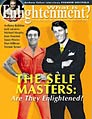
This article is from
Our Self-Mastery Issue


Advertisements


» Advertise with us