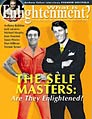
Isn't Life Just Great!An interview with Jack LaLanne by Andrew Cohen
introduction
"Living is tough, it's hard, and most people, especially religious people, spend too much time on their spirituality, hoping that this spiritual thing is going to do something for them. It doesn't work that way! They've forgotten all about honesty and integrity and really getting down to the nitty-gritty." Jack LaLanne is the ultimate example of a Self Master. But I had no idea, when his name came up while we were talking about this issue of WIE, what a truly remarkable man he is. The health and fitness guru of 1950s and '60s television fame is currently eighty-four years old and bursting with vitality. His radiant health, as remarkable as it is for any man his age, is overshadowed by the sheer joy that emanates from every fiber of his being. And his energy! "Either he's enlightened or he's crazy," I thought to myself as LaLanne, sitting across from me in the living room of his southern California home, pounded the side of his chair, shouting, "I've got to help the people!" To speak in spiritual terminology, his energy, his transmission, is one of relentless and overwhelming positivity. "Anything in life is possible, if you make it happen," he said to me, grinning from ear to ear. This American icon, who claims to have been "reborn" after hearing a talk given by a nutritionist in Oakland, California, when he was fifteen years old, has not looked back since. His infectious enthusiasm for that which changed his life—diet and exercise (he has "systematic, vigorous and violent" two-hour workouts every morning starting at 5:00 a.m. and never ever misses a day)—is unwavering. Not only was he literally decades ahead of his time in championing the lifesaving benefits of proper exercise and nutrition, but he is also the founding father of the modern health club and single-handedly designed and created the very first weight machines ever built. (He has a small museum in his house with the original models still intact. His energetic and equally gracious wife, LaLa, claims to use the antiques in her own workouts.) Jack (who didn't approve when I tried calling him "Mr. LaLanne") never cheats on his low-fat, supplement-intensive diet and is a living example of everything that he speaks about. Although most people under thirty may not know who he is, everybody thirty-five and over can't help but be familiar with the ever encouraging man in the skintight jumpsuit. "Why did Jesus perform miracles?—to call attention to his profession. Why do I do these incredible feats?—to call attention to my profession!" Since age forty, Jack has performed a series of incredible feats of strength on his birthdays. For example, at age forty-five he did 1,000 pushups and 1,000 chin-ups in one hour and twenty-two minutes, and at age seventy he swam handcuffed and shackled, towing seventy boats and seventy people, for one and a half miles while fighting strong currents! Although to some people an interview with Jack LaLanne about enlightenment and its relationship to self-mastery may seem incongruous, the remarkable thing about this extraordinary man is that he may indeed embody many of the unusual qualities of those throughout history who are presumed to have been enlightened. Although he himself had no concept of what is usually meant by the word "enlightenment" and always reduced the solution to every human problem to his perennial prescription of diet and exercise, his ferocious and unwavering single-pointedness of mind seems to have produced in him that one human quality that speaks louder than a thousand words—joy! A true yogi in the classical sense of the word, Jack LaLanne might have impressed Patanjali himself as a rare example of concentration, self-discipline and integrity. Renunciation and self-control, the pillars of any real practice of yoga, are Jack's intimate friends, and while he appeared to be at a loss whenever asked about spiritual depth, lightness of being seems to be his natural state. So, is Jack LaLanne enlightened? No, I don't think so. But this Self Master has more than a little to offer any and all who are interested in self-transcendence in any form. "Thoughts are things. Negativity is what kills you," Jack often says. And he means it! The vehicle of the Self Master is control over the mind and emotions, and Jack is indeed a master. For him, self-control is the key to liberation: "It's tough to do, but you've got to work at living, you know? Most people work at dying, but anybody can die; the easiest thing on this earth is to die. But to live takes guts; it takes energy, vitality, it takes thought. . . . We have so many negative influences out there that are pulling us down. . . . You've got to be strong to overcome these adversities . . . that's why I never stop." Jack's one-dimensional yoga is one-dimensional, but his example is indeed remarkable. While surrender and spiritual depth almost never seem to be acquaintances of the Self Master, the utter simplicity and indomitable spirit they embody may pose almost as great a challenge to the ego as enlightenment itself. How many of us can claim to know the peace of mind and purity of heart of one such as Jack LaLanne? The following interview is an entertaining adventure where two worlds collide. It became obvious almost immediately that Jack, true to his Self Master status, was the one who was going to remain in control! I tried my best to draw him into what would generally be considered to be a more "spiritual" context for our investigation into the relationship between enlightenment and self-mastery, and while I'm not sure I succeeded, he definitely convinced me that he is the real McCoy. interview Andrew Cohen:The topic of this issue is the relationship between self-mastery and enlightenment, and you are the person we wanted to speak to about self-mastery. Jack LaLanne: It's the key to everything. AC: So my first question for you is: What is self-mastery? JL: Self-mastery is controlling one's thoughts, controlling one's emotions and controlling as much of your life as you possibly can. But one will never, ever have complete self-mastery, for that's the human nature. And that's why everything comes down to believing—you have to believe. My whole thing is believing. I believe so strong. If something saved your life, would you believe in it? AC: Yes, I would. JL: Well, my life was saved by my profession. I was a weak, sick kid. When I was thirteen years old, I developed this terrific habit of eating sugar—my whole life was sugar, sugar, sugar. It destroyed all the B vitamins and affected my brain. I had this uncontrollable temper—tried to kill my brother on two occasions, failing grades in school, troublemaker in school—and then when I was about fifteen, the authorities had the doctors take me out of school for six months. I was about thirty pounds underweight and, like I said, I had failing grades and everything was going wrong with me. So there I was, a shut-in at home. One of our neighbors told my mother that there was a lecturer speaking at the Oakland Women's City Club, and this man was a nutritionist who had done wonderful things for people. So my mother—she was a pretty good salesgal—talked me into going. In those days I was wearing glasses, I was skinny, I had pimples and boils, and I was so bashful I didn't want anybody to see me. But I went to this lecture. Well, we were a little late getting there and there were no seats available so we started to leave, and the lecturer—he was up there lecturing—he said, "Lady with the boy, we don't turn anybody away! Ushers, bring two seats and put them up on the stage!" They put two folding chairs up on the stage and there my mother and I sat in front of all those hundreds of people. It was the most humiliating moment of my life. I'm perspiring, my little heart's beating, and I just knew all those people were looking at me—little did I know then that they all had problems of their own. Well, that guy was so forceful! "My dear friends," he said, "it matters not what your present physical condition is, it matters not what your age is, if you obey nature's laws you can be born again!" Well, I forgot everything! This man said I could be born again! That's what I wanted! I wanted to be an athlete, I wanted the girls to like me and I wanted to be able to get good grades in school, and this man said I could do all that. Now what did he mean by nature's laws? Exercise and eating properly! I went home that night and I said, "Dear God or somebody, I need help." I didn't say, "Make me a Mr. America, make me a straight-A student." I said, "Just give me the willpower to refrain from these foods that are killing me, all this sugar, sugar, sugar, all this processed food." That night, I went strict vegetarian. Then a few days later I joined the Berkeley YMCA. And you know what? In one week's time, I was born again. Absolutely! I used to have these blinding headaches, I used to pound my head against the wall because I couldn't stand the pain, and my energy was so down and everything was negative—I hated my brother, and my mother, and my dad, and other kids—and in one week that all changed. My folks couldn't believe it! I was actually born again! Now if something saved your life, would you be enthusiastic about it? AC: Yes, sir. JL: Well that's exactly it. See, if you get all these things together, you get the spiritual, you get the AC: So what would you say would be a concise definition of "self-mastery," then? JL: Being able to do the things that you believe in your heart you should do. Like being truthful. Being truthful to yourself. If I would ever lie to me, I'd lie to you. And if I were to lie to you . . . I mean, the only thing that Jack LaLanne has got going for him is telling the truth. I've got nothing else going for me; that's it, that's the whole thing. You see, I would never miss a workout, and I would never eat anything that I don't believe in. I'd be cheating! That's self-mastery; that's control, that's discipline, that's pride. And that's what we need more than anything else—pride and discipline. AC: And based on your understanding, what is God-realization or enlightenment? JL: You're speaking about God? Well, especially being in my profession, if you don't believe there is a Supreme Being, you've got to be psycho—you'd have to be sick! Do you think that man could ever make a calculator like your brain? Do you think that man could ever make a pumping system like your heart? Do you think that man could ever make a filtering system like your kidneys? Do you think that man could ever make a machine that the only way to hurt it is by not using it? I've just bought a new Corvette. Now that car, the more I drive it, the quicker it wears out, right? But how about this God-given machine? The only way you hurt it is not to use it. See, when I got enlightenment about all these things I was a young kid about twelve years old. I was in San Francisco, in Golden Gate Park, and we had an old Model-T Ford and I had to get out and crank it, and when it kicked it broke my arm. I had a cast for two months, and when I took that arm out of the cast, do you know what it was? A bone! I cried. I couldn't believe it. Was that old age? No—inactivity! You see, you don't get old from age, you get old from inactivity, from not believing in something. So that's what I've said a million times—and you've got to believe it—man could have never put together what we have, this human machine. AC: What do you think the difference is between what you're teaching—which is absolutely positive and obviously has the power to completely revolutionize one's life—and what it is that someone is describing when they say they've had a powerful spiritual experience? JL: I have a spiritual experience all the time! When I wake up in the morning, man, I'm telling you—I have hands, I have feet, and I praise that omnipotent power that gave them to me, whatever it is. We don't know what it is, but we've got to know that there is some power that's beyond our comprehension. But as I said, what I take into consideration, and what I try to practice, is what we do know—what we know, and what is positive. You know, I was just recently on Dr. Robert Schuller's show—I've got to help him, by the way, he's in bad shape; I've got to call him tonight and put him on a good program, nutrition, AC: What is your feeling, though, about the famous declaration of the enlightened person who says, "Thy will be done"—in other words, "It's not my will but the will of a higher power that does everything"? JL: Well, I don't believe that. I believe we are put on this earth to do the best we possibly can with what we have. Again, there are so many things we don't know about—but if I left everything to fate, I wouldn't have anything! I wouldn't be getting to people. I've got to make it happen! And I believe this with my mind and my heart and my soul: What can't you do? Anything in life is possible if you make it happen. AC: When you apply yourself in the way that you're describing and you discover this tremendous energy, do you ever have moments or experiences when you feel that there's also a power at work that is greater than yourself? JL: Yes, but this power is in me. I'm using it. It's in you, too. And it's for you and me to bring it out. AC: But in your book Revitalize Your Life After Fifty, you say, as you also did just a minute ago: "You cannot be in my profession of physical fitness (connected with the mind and the body) and not believe that there is a Supreme Being that keeps this universe together." What does that mean in practical terms? JL: Well, when we look at the sun and the stars all around us here, our minds can't comprehend it—we just can't comprehend this. But I'm a great believer that if there is an earth made over, if there's a life again, then if I do everything negative in this life—if I break all of nature's laws and lie and hurt people—I'll never get another chance. But if I do a good job—if I do everything good in this life and I help myself and I help my family and I believe in everything I'm doing—then if there is another world made over, I'll be there, because I've earned it. Everything you do in life, you earn it, earn it, earn it—good or bad. How do you think you get arthritis, or rheumatism, or mental illness or all these different heart diseases? People earn them by breaking nature's laws. Would you put water in the gas tank of your automobile? Well, your body is a combustion engine, and thoughts are things!—they affect it, too. AC: When I was thinking a lot about self-mastery, the simplest way I could think of to define it would be to say that it is the liberation of the "I Can" in the human spirit, because it liberates the individual from all kinds of limiting beliefs and directly reveals to them that, as you say, miracles are possible if we are only willing to act— JL: Look, miracles—you think all the miracles were in the biblical days? Do you know what we're doing now with people? Why do you think there are more people who are reaching a hundred years old than ever before in our history? We're getting these old people out of their rocking chairs, out of bed, eating right, exercising and believing in something. Even if you are ninety-five years old, you can double your strength and double your endurance in six to eight weeks—at ninety-five! This is actually the truth! Now if I can double your strength and double your endurance, wouldn't that be a miracle to you? If you are a big fat person and you lose eight or fifteen or twenty inches off your waist and you get more energy than you've had since you were a kid—that's a miracle. But the point is, we make our miracles happen. AC: Have you ever heard it said that in the spiritual realization there is a recognition of "I Am"? JL: Yes, I've heard that. AC: Well, some of the great spiritual masters who have experienced this realization say that in the recognition of this "I Am," the individual experiences pure being—pure being in which there is no doing, there is only being. They realize that they are not separate from everything that exists. JL: I do that all the time! Like I told you, I thank God—or something—that I'm here! I'm appreciative of this. AC: Of being? JL: Of being! Right. Absolutely. But I made that happen because I took control! AC: Good, so what I want to ask you is this: Some spiritual masters refer to this experience of being, and this experience of resting in being, as "enlightenment." And what they believe is that while on the path of self-mastery we strive to become, on the path to enlightenment we must endeavor to come to the end of becoming. In order to directly know oneness with all things, it is absolutely essential, they say, that we come to the end of becoming. This is, for example, what the Buddha spoke about. The Self Masters, on the other hand, tell us that in order to be able to realize and express our full potential as human beings, we must strive ceaselessly for greatness. So what I want to ask you is: Who has the right perspective here? JL: These are just words. All these religious people—why are there so many sick ones? Because they are not fulfilling what they have, they're not working at it! They want something for nothing. They're just like most Americans these days—they want to overeat, overdrink, smoke and not exercise, and then they go to the doctor saying, "Give me a magic shot, doctor, so I can feel better and look better." They all want that, but as I said, there is a price to pay. Living is tough, it's hard, and most people, especially religious people, spend too much time on their spirituality, hoping that this spiritual thing is going to do something for them. It doesn't work that way! They've forgotten all about honesty and integrity and really getting down to the nitty-gritty. AC: So what you're saying is that to become truly spiritual, to experience genuine spirituality, you have to really act—you have to do something—and you have to be willing to give everything. JL: Everything! Absolutely, no doubt about it; there are no free lunches. The whole plan about this is that you have the power to do it, but you have to take responsibility. I'm a normal human being, but the reason I'm normal is because I've worked at it! Like I said, there's a mental side to all this and you can't separate it from the physical. Too many people dwell on all kinds of things, but I work out seven days a week and that's my penance, that's my price to pay, that's to keep my mind down to where it should be instead of it running away. See, it's a psychological thing. You're actually punishing yourself, disciplining yourself—it all comes down to discipline. With my personality, I could be a runaway, out with a different woman every night, drunk every night, eating and doing things that—well, you know, you've got it in you, we've all got it in us. But that's why you've got to take control! So after I've done my workout in the morning, I've fulfilled my obligation, my price to pay for what I have. Nothing happens accidentally; there's always a reason, somewhere along the line. AC: What about grace? JL: What about what? AC: Grace—the descent of the spirit. It's called "grace" when it seems that for no apparent reason the spirit visits someone—then they say it was an "act of grace." JL: You see, that I can't get into, because that's never happened to me. Everything that's happened to me in my life is because of something that I've done to make it happen. Nobody's come out of the clouds. But your mind can play so many tricks on you. If you think something is going to happen—you know, don't dismiss the mind; it controls everything, right?—you can make yourself well or sick. There is so much that we don't know, and I don't think this Supreme Being that we've been talking about really wanted us to know everything. If we knew everything we wouldn't be inquisitive any more. That's why people who think they know everything lose their imagination. You need to get new thoughts, new challenges. It's like He's keeping that carrot—pardon the old saying—in front of the horse to keep it going. AC: I read an interview in which you said that the gym is your temple and that if you weren't a health and fitness guru, you'd be a religious fanatic. What exactly did you mean by that? JL: Well, being French, I started out in life as a Catholic and when I was two months old I was baptized a Catholic. But my mother got into Seventh Day Adventism because being a Catholic wasn't satisfying her. She was a very controlling person and she had my life all mapped out for me. She wanted me to become a medical doctor and go to Africa as someone representing the Church and saving people's lives and all, so it broke her heart when I went into my profession. But I said, "Mom, we have enough problems here in the United States without going to Africa. We've got plenty of people to save right here." AC: It certainly seems—in more ways than one—that for countless thousands you have fulfilled the role that spiritual masters or gurus do in the East, and I think the most impressive thing about you is your willingness to be an example for others. So what I'd like to ask you is this: Are you a guru? And why do you feel that living, breathing role models are so essential on the paths of self-mastery and liberation? JL: Actually, I never think of myself as a guru—especially getting the home training that I did, what with my mother always talking about being humble, appreciating what you've got and always pushing yourself down. So I've always had this feeling of inferiority, and of never thinking of myself as a guru. In fact, I never even think of what I've done. You know, everybody says, "Oh, you did this, you did that," and I say, "Yeah, like the guy who had a million dollars a year ago and today he's broke. What has he got?" You see, I never look back; I only think about today and tomorrow, about my work and how I can help these people. But how could I be an example, and how could you believe in Jack LaLanne, if I didn't practice what I preach? So here I am, eighty-four years old, and man, my lectures are getting better all the time, stand-up crowds and standing ovations—it's just incredible how I'm getting to people. I get them crying, I get them laughing, I get into their guts; and believe me, you have to be in shape to do that. That takes energy! And when I go out in public, I take time with the people; I sign autographs, I talk to them, I counsel them, I motivate them. Because that's why I've been put on this earth, to help these people. And people need help. When I opened my first official health club in 1936, I'd go to Oakland High School at noontime. I'd pick out the fattest kid I could find, and I'd get his phone number and his address and his name, and I'd pick out the skinniest kid I could find, and get his phone number, his address and his name. I'd go to fifty kids' homes, and I'd sign up fifty out of fifty—I never missed. I'd tell their parents, "I'm going to save this kid's life, he's going to have the greatest life anybody can have, and if he doesn't sign up, he's going to miss out on it." Then I'd tell those kids, "If you wear clean clothes, you're not going to be a follower, you're going to be a leader. I want you to cut your hair, I want those clothes to be neat and clean, and if you get lower than a C grade in school, you're OUT." Come to think of it, I was their guru—I was their mother, their father, their best friend, their everything. I knew about their sex life, about how much money they spent, their aches and pains and all their problems. They came to me, I was their consultant, and we were family. And I worked those kids, I'll tell you you wouldn't believe it. It's a wonder some of them didn't die! So that's how I get my reward. Can you put a price on a life? If you can save somebody's life, get that person to reduce their weight or get these older people working out, well, look what you've done—you've saved a life, the most precious thing there is! AC: What is the source of your compassion for other people and your interest in their welfare? JL: It's because, as I told you, I was sick as a kid for fifteen years. I was a raving psychotic maniac, aches and pains, the kids making fun of me at school and my brother beating me up all the time—it was just incredible! So I have compassion for those people who are sick. They need help! AC: But there are other people who have been through hard times and gotten themselves together but who don't seem to care the way you do. So what I'm asking you is: Where does this caring come from? What is the source of it? JL: Number one, my mother with her religious training. She always taught me about humility and caring for people. That's what she pounded into my head, so that's probably where it comes from. There's no doubt about it. Your home training has to mean so much, right? So that's an example of it. AC: But Jack, you seem like you really care. This just doesn't seem like something you learned. JL: I care more than . . . you cannot believe how much I care! AC: Yes, but my point is that that couldn't just come from something that you were taught. It seems like it's coming from inside you, from your heart. JL: Well it does, absolutely—where else do you think it comes from? It comes from these seventy trillion cells in my body, and it's wrapped up in Jack LaLanne's profession. I want to help somebody! Jesus, when he was on the earth, he was out there helping people, right? Why did he perform those miracles? To call attention to his profession. Why do you think I do these feats on my birthdays, these incredible things that I do? To call attention to my profession! When I first started out I was considered a crackpot. The doctors used to say, "Don't go to that Jack LaLanne, you'll get hemorrhoids, you won't get an erection, you women will look like men, you athletes will get muscle-bound"—this is what I had to go through. So I had to get people believing in me. "What does this Jack LaLanne have that I want?" I had to prove it. So I put handcuffs on and swam from Alcatraz, which is supposed to be escape-proof. Well, that called attention to my profession. "Gee, the guy is not a bunch of bull after all"—you know—and the athletes, they said, "Well, if he can swim like that, and if he won the Mr. America contest and all this stuff, he's got to have something going." Now I'm not comparing myself to Jesus, but I'm just telling you what I had to do to call attention to my profession. AC: There's something that comes out of you, though, a kind of passion that does seem to me to be very similar, or almost identical to, a spiritual or religious passion. JL: Well it is. It is a religion with me. It's a way of life. A religion is a way of life, isn't it? As I told you, I believe in a Supreme Being. I believe in this power that's been given to me, and I'm using it. We all have it, but we don't bring it out. And that's why I said my profession should be taught from the pulpit. Some of these poor people who are sick and tired and miserable and thinking of suicide, they think the only thing to do is to say a couple of prayers. You've got to get to these people and say, "Look, you can do it, but it's got to come from you. God's going to give you the power, but you have to take responsibility." AC: God helps those who help themselves? JL: Absolutely. AC: All right, but how does He help those who help themselves? JL: He helps them to do what they want to do—to eat better, to exercise, to think better, to have more pride and more discipline, to be more compassionate toward other people and not lie to themselves or to anybody else. These are all things that are there for us. But it's just like food on the table; if you don't go there and eat it, what good is it? What good is the spiritual aspect of life if people don't put it into their daily lives? What good are all these wonderful tools that we have if we don't use them? AC: From everything you're saying, it sounds like you're sure that what you're teaching and the way you're living is what God wants. Would that be fair to say? JL: It must be, because God is sure taking care of me. Think about it. He must be smiling on me, because I haven't had any heart attacks, I don't have any cancer, I don't have anything. I'm obeying all the rules, the laws of nature—eating right, thinking right and exercising. What else is there? AC: Well, often, when you're speaking about diet and nutrition, you also speak about integrity and honesty— JL: They go hand in hand; it's all a part of it. AC: Obviously we live in a world where a lot of people don't have integrity and don't live honestly in the way that you're speaking about, but the way you talk about honesty and integrity, it almost sounds as if these also are natural laws that must be obeyed. JL: That's exactly how I feel—I'm that passionate about it! You see, there are certain things that have been handed down for thousands of years, certain axioms that were true then and are true now. Like two plus two is four—it'll never be six and a half and it'll never be nine, right? Well, there are truths that go along with my profession and they're axioms—you've got to do these things. How you treat people and how you act are so important, because the most important person in the world is you. Think about it. A lot of people complain, "Oh, my husband, and my this and my that, and my kids. . . . " But what good are those kids, what good is your husband, if you're no good, if you're all fouled up mentally, physically, and you're sick all the time and you're not doing the things you're supposed to do? If you're not an example, then you're not motivating anybody. In fact, you're really making a lot of people suffer by not taking care of the most important person in the world. Now it's hard for me to talk like this because my mother always said to be humble—but it's the truth. I'm not doing all this stuff so you'll say, "Gee, Jack, you're a wonderful guy"; it's because I've got to do the best I possibly can and set my standards high so that the people who come to my lectures will follow them. That's my responsibility, because I know that in all these billions of years of existence, there's just one of you and one of me. Doesn't that mean anything? So if you can't afford half an hour three or four times a week to take care of the most priceless possession on this earth, which is your body, then you've got to be a bit psycho. Now a lot of people say, "Oh, I don't have the time." Or, "Oh, but I don't like it, Jack." But you know, I try to get to the gym by five in the morning, and I work out for two hours. To leave a hot bed and a hot woman to go to a cold gym—now that's dedication! And I've never heard this once—knock, knock, knock on the window in my gym: "Jack, this is Jesus, I'll work out for you today!" So that's the message we have to give all these people—that "we are fearfully and wonderfully made"—and we goof it up. If you're tired and pooped out all the time, do you have love and compassion in your heart for your fellow man? You don't even like yourself! You know, that's the only thing that I get really sad about. I see a sea of millions of people going down with their own negative thoughts, going down for the third time in this big sea of iniquity and negativity, and I feel like I've got the life preserver, but all I can do is say, "Grab it!" AC: The joy that you express, on the other hand, seems very akin to what is sometimes described as spiritual ecstasy. JL: Yes, well, that's what it is. When you eat right and you exercise and do all these things, you experience wonderful things, and you're a happier person. AC: Again, though, I've met other people who eat right and exercise right, but they don't express the joy, the confidence and the spirit that you do. JL: That's because they don't believe that there is something that put all this together. They don't realize that there is a Supreme Being—something that's in us and all around us that will accomplish all things. But we've got to believe that. AC: Are you saying now that that's the most important thing—this knowledge of, and confidence in, the presence and action of the Supreme Being? JL: Well sure it is—what do you think put us here? But you can't go around all the time just thinking that, you've got to take responsibility for you, for what you do. These other things are just kind of subliminal, they're around you and in you and— AC: Intuitive? JL: Right. And some people have it and some don't. And the ones that don't can have it if they work at it, but how many people do that? AC: So in terms of this distinction between self-mastery and enlightenment, in your view are they the same or are they different? JL: They're interwoven. You can't separate spirituality and self-mastery. Without spirituality you can't have self-mastery, because self-mastery is being able to control your emotions and control your life, and without this Supreme Being—this "God" or whatever you want to call it—without that power, you couldn't do it. You see, I'm using the power that this Supreme Being has given me to help me control Jack LaLanne; otherwise I'd be an animal. We are the chosen ones on this earth, we humans. We're a step higher. You know, it's just amazing what we have; we only scratch the surface of what we've got, but where is the limit? There is no limit. But this power, if you think about it, can also be used negatively—it can bring about wars and other terrible things. So is this power that we have for good or for bad? It all comes down to the choices that we make. AC: What are the qualities of a human being who's achieved self-mastery? JL: They're going to be kinder, more generous, more fun to be around, more productive, and they're going to be better parents, better husbands, better lovers, better citizens—everything about them is going to be better. Why? Because they've got control! If I've got control, I'm not going to lie to people, I'm not going to murder people and I'm not going to cheat them; I'm going to be a good human being, and if somebody needs help I'm going to help them. AC: So self-control is the key to liberation, to freedom. JL: Right. You see, as I said, it's a whole thing, a perfect circle; without one you can't have the other. AC: In your book you write about the role of prayer and meditation. Could you speak a little bit about that? JL: Well, the Supreme Being that's put us on this earth and that controls everything, I give my thanks to this Supreme Being. AC: So you mean prayer and meditation as an expression of gratitude? JL: Yes, absolutely—and we should be grateful! I express my gratitude all during the day; without even thinking, I just do it. When I'm driving my car, I say, "Gee, you've got a new Corvette, Jack, and how lucky you are to be living here in this wonderful country, and boy, you've got these lectures, you're going to reach thousands of people, and think of what a great wife you have"—these things are just in my brain. In other words, I try to keep all the negative stuff out of my brain, because negativity is like a poison; it develops an acid condition in your body, and some of these people who go to see psychiatrists are caught in that negative net. It's tough to do, but you've got to work at living, you know? Most people work at dying, but anybody can die; the easiest thing on this earth is to die. But to live takes guts; it takes energy, vitality; it takes thought, and you've got to have this pride, this discipline that we've been talking about. We have so many negative influences out there that are pulling us down. Thinking about the wars all over the world and the starving people and all this stuff just gets in your brain—and you've got to be strong to overcome these adversities. That's why you've got to plow ahead; that's why I never stop. Negativity is what kills you. Thoughts are things, thoughts are things! AC: You mentioned that some people who see psychiatrists are caught up in a "net of negativity." Do you mean to say that dwelling on our problems, trying to work them out, is a waste of time? JL: If you've got a problem, you may have to work at it, but you should conquer it. Most of your problems you can control, and so many of them are self-inflicted—people moaning about things they don't have instead of just getting them. As I keep saying, you've got to work at life. It's a pain in the backside, but it's just something you've got to do, and solving these problems is often just a matter of exchanging a few bad habits for a few good ones. AC: If you were to fall ill, would your indomitable spirit and positivity be shaken by it in any way? JL: Absolutely no, it wouldn't. I would do more! I would say, "Jack, you've broken nature's law somewhere." I'd take responsibility. I made it happen. God didn't do it, the devil didn't do it, you didn't do it—I did it! I did something wrong. AC: I've read that your first interest has always been people, and that even though you're not a poor man, you could have been a lot richer if you were interested in money. JL: I make money—more than I'll ever use, as much as I want—but I will not sacrifice my integrity! It's got to be what I believe in and what it's going to do for the people. It would just kill me to do something I knew was going to be wrong, you know? I'm hard on myself, I'm my own taskmaster. Even my wife says, "Oh, eat this, come on, Jack, nobody's going to know." I can't do it—nuts! But it pleases me. As I said, the most important person on this earth is me. After all, if I'm no good, how am I going to be a good husband, or a good father, or whatever? You are you and I am me, and I have to live with my conscience. So it's really simple: Just don't screw up. AC: That is all it takes, but it seems to be quite a big thing, what you've just said—"It's really simple: Just don't screw up." JL: Yeah, well, a lot goes on. You've got to keep having challenges. . . . Life's just great, isn't it? Isn't life just great? AC: Is there anything you're still striving to achieve? JL: I feel like I haven't done anything yet! I really do! I've got so much stuff inside me you can't believe it. I want to get to more people. In fact, I'm thinking of going back on television again. Do you know how potent I would be on television right now, at my age? Being able to do all the things I can do? AC: Oh, unbelievable, unimaginable. JL: Well, you see, this is exactly what I've got in my mind! Going back on again, five days a week—and do you know what the people want? They want me to do exactly what I did before. You probably don't remember my television show. AC: Of course I do! JL: When I first started that show I didn't know the first thing about television. But every day I'd give an inspirational talk—that anything in life is possible and it's never too late, right? Then there'd be a one-minute nutritional tip, and a little bit about what we were going to do the next day. And everything I did was for that person there at home. I had only one thing in my mind: "How can I make them healthier and happier? How can I make them better people?" And if there was one thing I knew, it was that I had to be the example. Otherwise it could never happen. |