Sign Up for Our Bi-Weekly Email

Expand your perspective with thought-provoking insights, quotes, and videos hand-picked by our editors—along with the occasional update about the world of EnlightenNext.

Privacy statement

Your email address is kept confidential, and will never be published, sold or given away without your explicit consent. Thank you for joining our mailing list!


Close Encounters of the Advaita Kind


The Euphoric Nihilism of Ramesh Balsekar
by Chris Parish
 

interview

WIE: You are becoming increasingly well known as a teacher of Advaita Vedanta both in India and in the West. Could you describe for us what it is that you teach?

Ramesh Balsekar:
I can put that in one sentence, really. The one sentence on which my entire teaching is based is: "Thy will be done." Or as the Muslims say, Inshallah—"God willing." Or to put it in Buddha's words: "Events happen, deeds are done, there is no individual doer thereof." You see, the basic conflict in life is: "I always do everything right so I want my reward, he or she always does something wrong and should be punished." That's what life is all about, isn't it?

WIE:
Well, it certainly happens a lot.

RB:
That is the basis of what I have observed. The whole problem arises because someone says, "I did something and I deserve a reward, or he did something and therefore I want to punish him for what he did."

WIE:
How do you get people to realize this?

RB:
That's very simple. If you analyze any action which you consider to be your action, you will find that it is the reaction of the brain to an outside event over which you have no control. A thought comes—you have no control over what thought is going to come. Something is seen or heard—you have no control over what you are going to see or hear next. All of these events happen over which you have no control. And then what happens? The brain reacts to the thought or to the thing that is seen, heard, tasted, smelled or touched. The reaction of the brain is what you call "your action." But, in fact, this is merely a concept.

WIE:
What is the difference then, between the thoughts, feelings and actions of an enlightened person and those of a person who is not enlightened?

RB:
The same thing happens. The only difference is that in the case of the sage, he understands that this is what is happening. So therefore, he knows that there is nothing he does—everything just happens. The sage knows that "I am not doing anything." But the ordinary man says, "I do things and he or she does things. Therefore I want my reward and I want him or her to be punished." The reward or punishment depends on the idea that he or she or I do things.

WIE:
I can understand from my own experience that we don't have any control over which thoughts or feelings arise. But sometimes action takes place and sometimes it doesn't, and it seems to me that there is a big difference between when a thought merely arises and when an action takes place that affects another person.

RB:
The action happening is the result of the brain reacting to the thought. If it so happens that the thought is merely witnessed and the brain does not react to that thought, then there is no action.

WIE:
But if, as you say, there is no person who decides how to respond, then what is it that causes an action to take place or not?

RB:
An action happens if it is God's will for that action to happen. If it is not God's will, the action does not happen.

WIE:
Are you saying that every action that takes place is God's will?

RB:
Yes, is God's will.

WIE:
Acting through a person?

RB:
Through a person, yes.

WIE:
Whether they're enlightened or not? Through everyone, in other words?

RB:
That's right. The only difference, as I said, is that the ordinary man thinks, "It's my action," whereas the sage knows it is nobody's action. The sage knows that "Deeds are done, events happen, but there is no individual doer." That is the only difference as far as I'm concerned, as far as my concept goes. The only difference between a sage and an ordinary person is that the ordinary person thinks each individual does what happens through that body/mind organism. So since the sage knows that there is no action which he does, if an action happens to hurt someone, then he will do all he can to help that person—but there will be no feelings of guilt.

WIE:
Do you mean to say that if an individual acts in a way that ends up hurting another, then the person who did it, or, as you say, the "body/mind organism" who did it, is not responsible?

RB:
What I'm saying here is that you know that "I" didn't do it. I'm not saying I'm not sorry that it hurt someone. The fact that someone was hurt will bring about a feeling of compassion and the feeling of compassion will result in my trying to do whatever I can to assuage the hurt. But there will be no feeling of guilt: I didn't do it! The other side of this is that an action happens which the society lauds and gives me a reward for. I'm not saying that happiness will not arise because of the reward. Just as compassion arose because of the hurt, a feeling of satisfaction or happiness may arise because of a reward. But there'll be no pride.

WIE:
But do you literally mean that if I go and hit someone, it's not me doing it? I just want to get clear about this.

RB:
The original fact, the original concept still remains: you hit somebody. The additional concept arises that whatever happens is God's will, and God's will with respect to each body/mind organism is the destiny of that body/mind organism.

WIE:
So I could just say, "Well, it was God's will that I did that; it's not my fault."

RB:
Sure. An act happens because it is the destiny of this body/mind organism, and because it is God's will. And the consequences of that action are also the destiny of that body/ mind organism. If a good deed happens, that is the destiny. For example, we had a Mother Teresa. The body/mind organism known as "Mother Teresa" was so programmed that only good deeds happened. So the happening of the good deeds was the destiny of the body/mind organism called Mother Teresa. And the consequences were: a Nobel Prize, rewards, awards and donations to the causes. All those were the destiny of that body/mind organism called Mother Teresa. On the other hand there's a psychopathic organism which is so programmed—by the same source—that only evil or perverted deeds happen. The happening of those evil, perverted deeds is the destiny of a body/mind organism which the society calls a psychopath. But the psychopath didn't choose to be a psychopath. In fact there is no psychopath; there is only a psychopathic body/mind organism, the destiny of which is to produce evil, perverted acts. And the consequences of those actions are also the destiny of that body/ mind organism.

WIE:
Are you saying that everything is predestined? That everything is preprogrammed from birth?

RB:
Yes. I use the word "programming" to refer to the inherent characteristics of the body/mind organism. "Programming" to me means genes plus environmental conditioning. You had no choice which particular parents you were born to, therefore you had no choice about your genes. By the same token you had no choice in being born in a particular environment. Therefore you had no choice about the childhood conditioning you received in that environment, which includes the conditioning at home, in society, school and church. The psychologists say that the total conditioning which you received up to the age of three or four is your basic conditioning. There'll be further conditioning, but the basic conditioning that creates the personality is genes plus environmental conditioning. I call that programming. Each body/mind organism is programmed in a unique way. There are no two body/mind organisms alike.

WIE:
Yes, but isn't it true that two people could have very similar sets of conditioning, and yet one might turn out a completely different way than the other?

RB:
Right. That's why I use two terms: one is the programming in the body/mind organism itself, the other is the destiny. The destiny is God's will with respect to that body/mind organism, stamped at the moment of conception. The destiny of one conception may be not to be born at all—in which case it will be aborted. This is all a concept, make no mistake. This is my concept.

WIE:
You say that this is a concept and, of course, all words are concepts, but how do we know that this concept is the truth? I tend to think that everyone has individual responsibility and that although there is a certain amount of conditioning that we inherit, we can still choose how we respond. One individual can transcend aspects of their conditioning that another might be stuck in all their life. Since this does occur, I would say that it is due to the individual wanting to transcend their conditioning, and succeeding.

RB:
But if that happens, can it happen unless it is God's will? Say there are two people: one tries to overcome his handicap and does it, the other doesn't. What I say is that the one who succeeds and the one who fails each do so because that is the destiny of each body/mind organism—which is God's will.

WIE:
But couldn't we just as easily say that it's God's will to give each individual free choice to make their own decisions?

RB:
No. You see, my question to you is: Whose will prevails? The individual's or God's? From your own experience, to what extent has your own free will prevailed?

WIE:
Well, I feel that the individual will can definitely prevail at times.

RB:
Over God's will? When you want something and you work for it and it happens, it happens because your will coincided with God's will.

WIE:
Let's take the example of an individual who becomes a drug addict and remains one all their life. One could just as easily argue that they've chosen to go against God's will and have succeeded—precisely because there is free will.

RB:
But whether you accept this or not is itself God's will, don't you see? That you accept God's will or you do not accept God's will is itself God's will!

WIE:
I would say—not necessarily.

RB:
I know you're playing the devil's advocate.

WIE:
Well, no, I'm trying to get to what's true.

RB:
But what is truth? I have already said that whatever I say is a concept.

WIE:
Yes, I understand, but not all concepts are the same. Some point to something that is true and others may not be true at all.

RB:
All concepts are trying to point to something, but they're all still concepts. The real question would be, "What is the truth that is not a concept?"

WIE:
My point is that saying that everything is preprogrammed, that it's all destiny and that there's no choice seems like a very extreme form of reductionism. According to this view, human beings are like computers; everything about us is completely set.

RB:
That's precisely it, yes.

WIE:
But that seems to me to be a view that lacks a human heart. Then we're just like machines—everything's happening to us. There's nothing we can do, nothing we can change.

RB:
Yes, exactly!

WIE:
But that could easily lead to a profound indifference to life.

RB:
Yes, and if it did, then it would be wonderful!

WIE:
Really? Would it?

RB:
But that is the point! Sure. Then you can say that whatever is happening is accepted. Then there is no unhappiness, there is no misery, no guilt, no pride, no hate, no envy. What is wrong with that?

WIE:
But is there any heart left?

RB:
By "heart," do you mean being miserable, feeling guilty?

WIE:
No, no. I don't mean that.

RB:
What do you mean by heart?

WIE:
I mean something in us that cares about Life in the big sense.

RB:
As I already told you, an act happens through this body/mind organism, and if this individual finds that that act has hurt somebody, compassion arises. How can compassion arise if there is no heart?

WIE:
But doesn't it seem a bit strange to go ahead and hurt someone and then feel compassion for them afterwards? Wouldn't it be better not to hurt them in the first place?

RB:
But you have no control over it! If you had control over it, you would never have done it in the first place.

WIE:
On the other hand, though, if one believed that one does have control over it as opposed to believing that one doesn't, one might not have done it in the first place!

RB:
Then why does the human being not exercise control over every action that is happening? Let me ask you a question: The human being obviously has tremendous intellect, so much intellect that a petty human being has been able to send a man to the moon.

WIE:
Yes, that's true.

RB:
And he also has the intellect to know that if he does certain things, terrible things will happen. He has the intellect to know that if he produces nuclear armaments or chemical weapons, then people are going to use them and terrible things are going to happen to the world. He has the intellect—so if he has free will, then why does he do it? Why has he reduced the world to the condition it is in, if he has free will?

WIE:
I admit, the situation you're describing is obviously insane. But I would say that it's due to the fact that people are weak-willed. And I believe that people can change if they want to—if they care.

RB:
Then why have they not done it?

WIE:
Some people do change, but, as I said, unfortunately it does seem that most people are very weak-willed.

RB:
Which means they have no free will!

WIE:
Having free will alone doesn't insure that we will act intelligently. As in the example you just gave, it's clear that people often choose to do things that are pretty harmful.

RB:
Do you mean we have the free will to destroy the world? If you are saying that we have the free will to destroy the world, in other words, it means that we are destroying the world because we want to do it—knowing full well that the world is going to be destroyed! Free will means that you want to do it.

WIE:
I think the problem is more that people usually don't take the consequences of their actions into account. They often just think about themselves, without considering where their actions might lead.

RB:
But the human being is tremendously intelligent. Why don't they think in those ways? My answer is—because they're not supposed to!

WIE:
When you say "not supposed to," what does that mean?

RB:
It is not God's will that human beings think in those terms. It is not God's will that the human being be perfect. The difference between the sage and the ordinary person is that the sage accepts what is as God's will, but—and this is important—that does not prevent him from doing what he thinks should be done. And, what he thinks he should do is based on the programming.

WIE:
But why would the sage "do whatever he thinks he should do" if, as you've already explained, he knows that it is not he who is thinking in the first place?

RB:
You mean, how does the action happen? The answer is that the energy inside this body/mind organism produces the action according to the programming.

WIE:
So the action, as you're describing it, just comes through the person.

RB:
Flows, yes. Action happens. So that is the whole point of what I'm saying—to go back again to Buddha's words—"Events happen, deeds are done."

WIE:
From what I know of the Buddha though, he also felt strongly that the individual was personally responsible for their actions. Isn't that the basis of his whole teaching on karma, on cause and effect?

RB:
Not Buddha!

WIE:
It's my impression that the Buddha taught quite a bit about "right action." He seemed very concerned with what people did and put a lot of emphasis on people making appropriate effort to change themselves.

RB:
That is a subsequent interpretation of Buddhism. Buddha's words are very clear. Who is in control of what is happening? God is in control! That is the basis of every religion, as we've seen. And yet why are there religious wars if that is the basis of every religion? It is the interpreters who are causing these wars! And how could even this happen unless it is God's will?

WIE:
It's clear that you believe that everything we do is because it is God's will that we do it. But it seems to me that this only really makes sense in the case of the individual who has come to the end of the spiritual path—who has come to the end of ego—because that person's actions aren't self-serving, and because of that, there wouldn't be any distortion of God's will. But until that point, if an individual acts nastily towards another it may well be just a compulsive response because they're feeling selfish. If that was the case, then what you're saying could actually be used as a justification for unpleasant or aggressive behavior. They could just say, "It's all God's will. It doesn't matter!"

RB:
I know, but that is the truth. Your real question is, "Why did God create the world as it is?" But you see, a human being is only a created object that is part of the totality of manifestation that has come from the Source. So my answer is: A created object cannot ever possibly know its creator! Let me give you a metaphor. Let's imagine that you paint a picture, and in that picture you paint a figure. Then that figure wants to know number one, why you, as a painter, painted that particular picture, and number two, why you made the figure so ugly! You see, how can a created object ever possibly know the will of its own creator? My point, though, is that this doesn't prevent you from doing what you think you should do! Accepting that nothing happens unless it is the will of God does not prevent any person from doing what he thinks he should do. What else can you do?

WIE:
But based on this line of reasoning, as I said before, I would think it would be quite easy to conclude, "Well, it's all the will of God, it doesn't matter what happens," and then just give up.

RB:
You mean, "So why should I not remain in bed all day?"

WIE:
Yes, why make any effort at all?

RB:
The answer to that question is that the energy inside this body/
mind organism will not allow this body/mind organism to remain idle for any length of time. The energy will continue to produce some action, physical or mental, every split-second, according to the programming in the body/mind organism and the destiny of the body/mind organism, which is the will of God. But that doesn't prevent you, who still think that you're an individual, from doing what you think you should do. So what I'm saying in fact is, what you think you should do in any situation at any particular moment is precisely what God wants you to think you should do! The bottom line is that accepting God's will does not prevent you from doing what you think you should do. You see? In fact, you cannot help doing it!

WIE:
It sounds as though, according to your way of seeing the world, all of what we consider to be choice, volition and responsibility has been shifted from the individual onto God or consciousness. Is that what you are saying?

RB:
It has not been shifted. When you think you are doing it, what happens? Guilt, pride, hate and envy. But that still doesn't prevent whatever is happening from continuing to happen. But when you think you are not doing it, then—no guilt, no pride, no hate, no envy! Life becomes more peaceful.

WIE:
I read something in a pamphlet written by several of your students which seems relevant to this point. It says: "What you like can only be what God wants you to like. Nothing can happen unless it is His will."

RB:
Yes, that's right.

WIE:
The pamphlet also says: "Don't feel guilty even if adultery happens. You, the Source, are always pure."

RB:
That is what Ramana Maharshi said.

WIE:
My point is that the Source may always be pure, but again, it seems to me that this could easily be taken as a license to act without conscience. You could say, "It doesn't matter if I commit adultery, it doesn't matter if I hurt my friends because that action just happened." It could easily be taken as a license to act out on a desire, just because I happen to have that desire.

RB:
But isn't that what is happening?

WIE:
It does happen, certainly, but . . .

RB:
Do you mean that it will happen more?

WIE:
It could easily happen more. I could say, "Well, it doesn't matter what I do now. I shouldn't bother to restrain myself if I feel a desire." Do you see what I mean?

RB:
The question usually asked is this: "If I am not really doing anything, what is to prevent me from taking a machine gun and going out and killing twenty people?" That is what you are asking, isn't it?

WIE:
Well, that's an extreme example.

RB:
Yes, take an extreme example!

WIE:
But I think it's more interesting to consider the adultery example, because many people wouldn't really do something as extreme as machine gunning other people.

RB:
All right. It's the same thing when we're talking of committing adultery. I read that the psychologists and biologists have, based on their research, come to the conclusion that if you're cheating on your wife, you shouldn't blame yourself.

WIE:
Well, I don't think that is the whole opinion of science.

RB:
What I'm saying is that, more and more, the scientist is coming to the conclusion that the mystic has always held—that whatever actions happen can be traced to the programming.

WIE:
I can see that in some cases this might be true, but let's say, for example, that I have the urge to commit adultery. I could say, "It must be God's will that I do it, so I'll go ahead"—or, I could restrain myself and not cause a lot of suffering for my friends. Wouldn't it be better if I restrained myself?

RB:
So who is preventing you from restraining yourself? Do whatever you like! What is preventing you from restraining yourself? Restrain yourself!

WIE:
My point is that it's better to do so!

RB:
That's my point, too.

WIE:
But according to your view, I could just as easily say, "It must be God's will because I feel a desire," and then not restrain myself.

RB:
You're saying that you know you should restrain yourself—then why don't you restrain yourself? If a body/mind organism is programmed not to cheat on his wife, whatever anybody says, he won't do it. If you are so programmed that you won't raise a hand against somebody, will you start killing people? Now if there is a law passed that you can beat your wife and no action will be taken against you, will you start beating your wife? Not unless the body/ mind organism is programmed to do that, and if it is programmed to do that, it has been doing so anyway. So as I said, accepting God's will does not prevent you from doing whatever you think you should do. Do it! Do exactly what you think you should do!

WIE:
In the end, though, how can we say that we know it is destiny or God's will? All we know is that certain events take place. Afterwards we can look back on something we did and say, "It just happened," and if we like, we can call it destiny. But isn't it more accurate to say that we don't really know whether it is destiny or not?

RB:
That's the point. We don't know.

WIE:
But saying that we don't know is different from saying "we know that it is God's will." It's different from saying we know that everything is fixed. You see, it sounds to me like you're saying that you do know that everything is the will of God. What I'm suggesting, though, is that we just don't know; we don't know if it is God who is deciding these things, so we can't really say, "This is how it works" or "Everything is all mapped out by God."

RB:
We don't know and that is the bottom line; so if you like, you can drop the concept of destiny and say that nobody can really know anything. Fine! There is no need for the concept of destiny. After all, if you accept that whatever happens is not in your control, then who is there to be concerned with destiny?

WIE:
Since many spiritual seekers come to you for advice about the spiritual path, I'd like to ask what you see as the value, if any, of spiritual practice as a means towards enlightenment.

RB:
If sadhana [spiritual practice] is necessary, a body/mind organism is programmed to do sadhana.

WIE:
In other words, if it happens, it happens?

RB:
That's right.

WIE:
You don't advocate it or think it's helpful to do?

RB:
People sometimes ask me, "If nothing is in my hands, should I or should I not meditate?" My answer is very simple. If you like to meditate, meditate; if you don't like to meditate, don't force yourself to meditate.

WIE:
Is spiritual seeking then an obstacle to enlightenment?

RB:
Yes, seeking is the greatest obstacle because of the seeker. It is the seeker who is the obstacle—not seeking; seeking happens by itself. Seeking happens because the body/ mind organism is programmed to seek what it is seeking. So if the seeking for enlightenment is happening, then the body/mind organism has been programmed to seek. The obstacle is the seeker who says, "I want enlightenment."

WIE:
Why is it then, that many great sages have spoken about the importance of seeking? Ramana Maharshi said that the seeker has to want enlightenment as badly as a drowning man wants air—with that degree of one-pointedness and sincerity.

RB:
Sure. So what it means is that there has to be that kind of intensity in the seeking. But he also said, "If you want to make an effort, you must make an effort; but if effort is destined not to be made, effort will not be made." That's what Ramana Maharshi said. So you see, whether one seeks or doesn't seek is not in your control. Whether seeking for God or seeking for money happens is neither your credit nor your fault.

WIE:
You've written in one of your books that one has actually reached quite a deep understanding when one can say, "I don't care if enlightenment happens or not in this body/mind organism."

RB:
That's right. When he reaches that stage then it means that the seeker is no longer there. It is extremely close to enlightenment because if there is no one to care, then there is no longer any seeker.

WIE:
But couldn't the result just be an extraordinarily deep indifference—which is not enlightenment?

RB:
That could lead to enlightenment!

WIE:
I want to ask you just one more question. You often say that we should "just accept what is"—

RB:
Yes, if it is possible for you to do so—and that is not in your control!

[ continue ]


Subscribe to What Is Enlightenment? magazine today and get 40% off the cover price.

Subscribe Give a gift Renew
Subscribe
 

This article is from
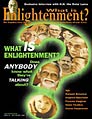
Our Advaita and Buddhism Issue


Advertisements


» Advertise with us