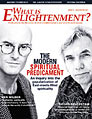
The Conscience of AmericaAn interview with Dr. Laura Schlessinger by Craig Hamilton
introduction
Could it be that America's #1 talk radio shrink is calling us to a higher moral standard than many of the most renowned spiritual teachers of our era? Our exploration of popular spirituality in America had taken us far and wide—from the cafés and bookstalls of Andrei Codrescu's New Orleans to the peaceful, makeshift northern California Tibetan temple where we met with Georg Feuerstein to a Hilton hotel conference room in western Massachusetts filled to near capacity with a thousand admirers of Deepak Chopra. But, as our plane descended through the thick blanket of L.A. smog that hot, already summer morning in late May, I couldn't help thinking that here, the heart of so much of American popular culture, home to Hollywood and Beverly Hills, Venice Beach and the Valley, was somehow the last place on earth I expected to find myself seeking clarity on the confusing picture of contemporary American spirituality. As our pilot banked a turn over the crowded beaches that have made Coppertone a household name, my thoughts drifted back to northern India, to the day I first heard about the media phenomenon known to millions as "Dr. Laura." It was February of this year, at the beginning of our annual retreat in the Indian holy city of Rishikesh and our editorial team was meeting on the ashram rooftop to discuss plans for our next issue. "Check this out," my colleague and friend exclaimed, producing a newspaper clipping from the San Francisco Chronicle weekly entertainment supplement, "this woman sounds unbelievable." The full-color front page spread bore the smiling image of a blond, coiffed forty-something woman in a brass-buttoned bright blue suit, and the headline: "This Doctor Is In: A Radio Shrink Is Captivating the Country by Talking Tough and Preaching Morality." While I make every effort to keep an open mind regarding our editorial content, that day I apparently missed the mark. "Sounds interesting," I responded, "but we don't have a lot of time so perhaps we should stick to discussing people we're considering for this issue." "But that's why I brought this," my friend replied, "I think we should consider her for this issue." "A radio shrink? But I really don't see . . ." Realizing it was probably time to give him the benefit of the doubt, I let my protestations fade to a mumble, and he began to read. "Dr. Laura Schlessinger is on a mission," the article began. "Her aim? A reversal of the 'anything goes' excesses of the sixties. Her method? Drilling into her listeners' brains the message that they won't find happiness in doing their own thing, but in sacrifice, personal responsibility and duty." While I have to admit my initial impression was only slightly changed by this lead-in, there was something in it that caught my attention. Characterizing Dr. Laura (now the number two talk radio host in America) as a tough, no-nonsense ex-therapist who is unafraid to tell callers and listeners alike exactly what she thinks of how they are living their lives, the article went on to explain that she considers her primary work with people to be in the areas of ethics, morality—and spirituality. It also described, among other things, her critical views on the self-help movement, including her feeling that thirty years of self-searching and psychotherapy has helped to foster a climate in which the pursuit of self-fulfillment at almost any expense has been elevated to nothing less than a sacred quest—and that because of this, people in general no longer feel obligated to anything but themselves. I think more than anything it was this last point that made me start to change my tune. For in our own exploration into the modern spiritual predicament, this was one of the most troubling observations we had made—that much of what is currently taught in the West in the name of spiritual transformation often seems to make people more narcissistic than they were before they became interested in spiritual matters. And now here it was in black and white. With little to go on but a torn newspaper clipping from a distant corner of the world, I began to wonder: could it be that she, a radio therapist presumably in touch with a far different sector of the culture than we were, is actually responding directly to the very predicament that we wanted to address in this issue? The thought was intriguing. For if what the article said was true, Dr. Laura seemed, in her own way, to be calling into question many of the fundamental ideas of the modern human potential movement, many of the seemingly revolutionary views on personal growth and human nature that over the past two or three decades have come to be accepted as truth by a vast sector of progressive America. And what's more, she seemed to be taking a strong stand with her callers on the most challenging moral issues. (In this vein, the article also mentioned her conservative views on a number of social issues, leading us to assume that we wouldn't necessarily see eye-to-eye about everything.) But that a radio psychotherapist—someone whose ratings and therefore career depend entirely on her ability to keep the interest of a popular audience—seemed to be presenting a challenging, even hard-hitting message sure to carry callers and listeners alike well beyond their comfort zones was not something we could easily ignore. That she might also even be rejecting many of the most fundamental precepts of the psychotherapeutic paradigm from which her entire profession was spawned, on that day beneath the blinding Indian sun, seemed more than I could fathom. There, against the flanks of the rugged Himalayan foothills, looking out on the Ganges swirling by, I began to seriously consider the possibility that we might actually have found a comrade of sorts in that most unlikely of places—the popular American media. It wasn't until we arrived back in the States over a month later that we finally had a chance to listen to Dr. Laura. And on that particular afternoon, she delivered everything we expected—and then some. "Good afternoon. I'm Dr. Laura Schlessinger. My number: 1-800-Dr. Laura, that's 1-800-D-R-L-A-U-R-A. Mark, welcome to the program." Her first caller that day was a twenty-nine-year-old man who, after a brief testimonial to the life-changing impact of her show, explained that, out of fear of obligation and responsibility, he was having trouble with commitment. "I guess I'm selfish is what it comes down to," he told her. Conditioned by my psychotherapeutic training to expect a soothing rebuttal to his negative self-judgment followed by a series of probing questions into the source of his anxiety, I did not anticipate her response. "I think most creatures are," she began. "Let's face it. The first instinct is self-survival, right? That's the animal in us. But our opportunity in life is to go beyond being merely animal, which is to make ourselves in God's image by our efforts." After a short discussion about the merits of commitment, in which she twice forced him to stop in his tracks and reflect on what she'd said, she responded to his statement that he was probably overanalyzing and just needed "a nudge," with the following: "You're not overanalyzing. You're facing a dilemma that all human beings face—how do I rise above being an animal? And the only way you do that is to give. There is no nudge. There is nothing that is going to change your mind completely. There is nothing that is going to make you feel sanguine. There's you having the courage to be a man and not a male animal. It's courage. And courage doesn't come from being convinced. When men go over the hill to fight a battle, are they convinced they're not going to die? Are they convinced in advance that they're going to win the battle? They're hopeful. But they're not convinced, and they do it anyway. Because the goal is worthy and they have faith in that goal and passion for that goal." For those of us whose frame of reference is the free association of Sigmund Freud, the reflective listening of Carl Rogers and the dream analysis of Carl Jung, such an impassioned call to honor seems a far cry from therapy. But over the course of the one-hour slot we were able to catch (she's actually on a full three hours, five days a week), we were witness to six such encounters covering everything from dealing with aggressive in-laws to homophobia. In one particularly demanding dialogue with a schoolteacher trying to navigate a troubled student's apparently malicious parents, Dr. Laura even launched into a riveting discourse on the failure of the psychiatric establishment to recognize the existence of evil. Evil? On a shrink show? By the time the hour was through, three things had been indelibly impressed on my psyche: First, by no stretch of the imagination, could this be called a shrink show; second, Dr. Laura did have a more conservative worldview than I could personally embrace; and third, if our issue was going to be complete, I had to speak with this woman. It was clear that the perspective Dr. Laura was bringing to every dilemma that crossed her path would, if nothing else, provide a stark and compelling contrast to almost every popular approach to personal growth that we know. If numbers are any indication, Dr. Laura seems to be having an impact. In the three years since her program entered national syndication, her popularity has been skyrocketing. In the U.S. alone, her show is now heard by over 20 million listeners tuning in on over 450 stations (a close second only to right-wing propagandist Rush Limbaugh). She is the number one talk radio host in Canada, and with international syndication now carrying her throughout the U.K. and into South Africa, it appears that the entire English-speaking world will soon have an opportunity to get her daily blast of moral and spiritual adrenaline. With as much energy as she seems to have for her work, it should come as no surprise to find that she is as active with the pen as with the microphone. In addition to writing a syndicated weekly newspaper column and a monthly Go Take On the Day newsletter, in the past two years she has produced two bestselling books, the second of which, How Could You Do That?! The Abdication of Character, Courage, and Conscience, is at the time of this writing third on the New York Times nonfiction bestseller list. Her third book, Ten Stupid Things Men Do to Mess Up Their Lives (a companion to her first similarly entitled book for women), is due out this fall. Even in cyberspace, she seems to be making waves. Now online with a full-scale website—merchandising catalog and all—she held her first online chat room in May. With over 300,000 responses in the first fifteen minutes (the largest response ever to an online chat), her enthusiastic wired listeners crashed the server and the virtual discussion was postponed until further notice. I spoke with Dr. Laura in the studios of her home station, KFI radio in Los Angeles. There, surrounded by framed magazine articles and covers displaying her beaming smile, she was humorous, friendly and surprisingly unpretentious for a person of her celebrity, in most ways identical to the Dr. Laura I had by that time grown accustomed to hearing on the radio. During the course of our conversation, which lasted just over an hour, she revealed much about herself, and particularly about the strong religious worldview from which her passionate conviction arises. "When I do anything, I do it one hundred percent," she told us, and that is no less true for her religious life than for her martial arts practice (at age fifty, she has a recently attained black belt in karate). Having always identified with the Jewish roots that came to her from her father's side of the family, in 1996 she "converted" to Orthodox Judaism. She keeps kosher. She observes Shabbat. She attends synagogue. She believes in the covenant. And because of her high-profile position, she has the good fortune of an ongoing Jewish education under the guidance of a legion of rabbis across the country with whom she corresponds and converses regularly. So I was intrigued when, early in the interview, she confided that in her own spiritual life, she feels a lack of intimacy with and connectedness to God. As our conversation continued, though, it became increasingly clear that Dr. Laura is not so much a woman of spiritual depth as a woman of faith, that her passion and conviction come not from direct spiritual experience, but from her unwavering belief in the ideas and ideals of her chosen religion. In light of our issue on modern American spirituality, it is almost ironic that while Dr. Laura seems to have no concept of enlightenment, and is in no way attempting to teach a path to transcendence, she actually seems to be holding people to a much higher standard than many of those who do claim to be guiding others to that ultimate attainment. interview WIE: One of the messages in your book How Could You Do That?! is that we always know what we're doing and therefore always have the freedom to choose our actions. This is an idea that flies in the face of much of contemporary psychological and spiritual thinking. Dr. Laura Schlessinger: I know, because they say, "it's unconscious." WIE: This is a very popular view. LS: It's completely misguided. I have never talked to anybody who didn't really know what they were doing. Never once. And usually—in about eighty-five percent of my calls—I say, "You knew this, right? You knew you were doing this." And they always say, "Yeah, I knew. But I didn't want to admit it. I didn't want to think that I was bad." People don't always want to admit to their thoughts, feelings or motivations. WIE: So you're saying that the idea of the unconscious is just an excuse? LS: Yes. If I have a framework of voodoo, and I can sit with you long enough to get you to agree with me that things are caused by evil spirits, then things are caused by evil spirits. If I tell you that things are caused by your subconscious and you respect me, then things are caused by the subconscious. WIE: In line with this, Sigmund Freud put forth an idea that has now become widely accepted, which is that "everyone is doing the best they can." LS: That's not necessarily true. A lot of times, we don't put our effort into doing better. We coast. Now, I'm constantly reading Jewish law and Jewish thinking. And every time I read something, I realize, "Yes . . . I've been doing that." I expose myself to scrutiny by studying the scriptures. That means I'm working to be better. That's why I say that I think people who are religious are in general better people than those who are secular, because the religious people are constantly going to church, having somebody nag them. They read the material and they're constantly opening themselves up to the possibility that they could be better. Secular people are often just trying to get the Mercedes or get ahead. WIE: The subtitle of your book is "The Abdication of Character, Courage, and Conscience." LS: Yes. Maybe I shouldn't tell you this, but at first the publishers didn't want that there. They said there were too many big words. (Laughs) And I said, "No, no, no." You've got to hit all levels and that's what it means. We've abdicated our character and our conscience and it takes courage to expedite those two. WIE: Could you speak a bit about what that abdication is? LS: Well, we've gone back to idol worship, and you know what the idol is? Where's my mirror? Me! That's our new idol worship. Really! We walk around with mirrors. What pleases me? What will make me look good? What will make me feel good? Me. Me! And if you have everybody doing that—if you and I are doing that—then I'm not caring about you and you're not caring about me (except for what we might get from each other) and we'll both be empty and hungry and lonely. The abdication is of values and ideals. WIE: And so people abdicate their character, courage and conscience in the pursuit of— LS: In the pursuit of "me." WIE: What I want. LS: Yes. Because to do wrong is easy. I liken that to a slide on ice downhill. I don't know why it was planned this way. I certainly would have made it differently, but then I guess you'd have God's kingdom on earth. I have said on the air, "I can tell you how you can very easily know what the right thing to do is. It's too damn hard. It's too damn uncomfortable. It's too damn costly and it's too damn painful." When you can say any one or some combination of those, it's the right thing. The wrong thing is easy, because it satisfies immediately and requires no sacrifice. WIE: Another thing you state in How Could You Do That?! is: "With an intense emphasis on honor and integrity, many of people's painful situations or problems simply would not exist." LS: Yes. That means a couple of things. For example, one of my callers might say: "My father abandoned us and it made me feel unloved and lost. So when this man showed attention to me, it just filled my heart with joy . . . of course, he's married with three kids. But it's my heart and my joy." And I began saying to people, "How decent is this, to fill yourself up at the expense of somebody else's pain? To create for somebody else the very problem that caused your original pain? Talk about original sin! This is your original pain that you then create for someone else, and you derive joy from it. Does that sound decent and is that really wonderful?" They'll call me saying, "I'm going with a married man." You've heard talk radio therapists—who I call "shrinklets"—take this kind of call. Typically the shrinklets on the air say, "Oh, you poor thing. He can't be there for holidays. You poor thing. How you're suffering. He's such a bad man!" And I would listen to that year after year thinking, "There's something wrong with this picture." I would sit with this woman and say, "How could you do that? Why does your pain entitle you to do wrong, to do evil, to do damage, to do hurtful things? The reason you're in such pain is that you did not choose to be ethical. If you chose to be ethical, you wouldn't be in this relationship. You'd be sitting with your pain of loss, but finding some constructive way to get by it, to go on and do great things with your life." WIE: So mistakes people make are— LS: Based on greedy gratification, and then it compounds because it becomes a bigger mess. So many of the problems we get into come from putting aside ethical behavior for emotional gratification, which is why on my show you'll often hear me say, "Did I ask you about your feelings? I assume you're hurt, you're scared. I go through all that too. But that's not the basis from which we make our decisions." What if I said, "I know you need my help, but I'm having a really bad day, so the hell with you"? According to Jewish law, it doesn't matter what kind of day I'm having. I have to help you. So when your basis for responding is a standard of behavior not related to your feelings, then I guess you leave the sixties, seventies, eighties and nineties behind and you enter the Holy Land! And that's what I'm trying to get people to do. Because we've based everything on our feelings. We've taken our feelings to be an omen. We say, "Ah, I'm horny about you, so I guess we have to make it! And it doesn't matter who we would be hurting because I have these feelings." I've actually had people say that! "But he or she turns me on!" Well, you know, Jeff Goldblum in The Fly turned me on too—until he turned into a fly. What's your point? If we all act out on our feelings, as extreme and irrational and fleeting as they are, then we're all terribly unsafe from one another. WIE: What does that say to the therapists who have spent all these years trying to help people get in touch with their innermost feelings as a way to wholeness? LS: They've made a mistake. It's been a terrible mistake. It's been a tragic mistake. On some level, being honest about your emotions is good. For instance, I'll say to somebody on the air, "Don't give me that. You really want to stick it up their nose." And they'll say, "Oh, no!" and I'll say, "Don't give me that good person thing. You really want to stick it up their nose." At some point they'll admit it, and then I'll say, "Okay, that's fair. It's fair to feel that way. But it's not fair to act from that feeling." I think that if you're clear about your evil and positive feelings, then at least you have some basis for honesty with yourself. But that's not the place out of which you make decisions. I'll be somewhere, someplace, going through something and I'll turn to my husband and I'll say, "You know what I really want to do?" (Grits teeth) But I can't, because I want to be a good Jew. I can't do that. That doesn't mean at that moment I feel this wonderful, spiritual experience. Most of the time, I have to walk around for a day feeling irritated. Ultimately though, all those moments add up to me feeling like a better person and having more self-respect. That's ultimately where self-esteem and self-respect come from. WIE: So if we're not basing our decisions on how we feel—which is a radical shift in orientation for most of us—what do you see as the criteria, in a universal sense, for how to act? You seem to be saying there is some kind of barometer other than how we feel, that we can count on. LS: Yes, God's law. WIE: As the written word? LS: Written and interpreted. There was a time when a group of rabbinic scholars sat down and decided, "Well, just because your child badmouths you, you shouldn't really have to stone him. Maybe God meant that philosophically. (Laughs) Maybe you give them time out!" Of course there's interpretation, because God didn't e-mail the word. If he e-mailed at Sinai, everybody would have been confused and wondered, "What's that?" I've spoken with my son different ways at different ages. I try to explain things within his context so he can understand. So here's God at Sinai talking to all of these people who had just spent a couple of hundred years being slaves. How was he going to explain what was now expected? It had to be done in a context that could be understood then and there by those people with their level of comprehension. It is our understanding that the law was given in a context that could be understood then. To some extent it has to be updated. But basically it's biblical religious understanding. The Christian rules of behavior and the Islamic rules of behavior and the Jewish rules of behavior are actually not all that different. WIE: Do you feel there's anything inherent in us that has an awareness of right and wrong, that there's some kind of moral sense? Do you think a person who didn't have the written word could look into life for themselves and discover a natural basis for morality? LS: It would have to be based upon something personal. For instance, someone might say, "I know somebody said it wasn't okay to have sex outside of marriage, but nobody's ever going to know and he's awfully cute and it feels right. So, why not? And that's now my moral sense." It becomes subjective. It becomes convenient. It becomes circumstantial. Without God, goodness becomes defined individually and the two of us would have very different ideas. So the answer is, no, ultimately I don't think so. When there have been cultures without a fundamental belief in God, like Nazi Germany or Stalin's Russia, we've all seen the results. I don't like 'without God.' That doesn't mean we all do it right. There was an Inquisition. So it doesn't mean that because we use God as a format that we do it right. We are still quite fallible. Ultimately evil is here because either we are evil—or we stand by and let it happen. And part of perfecting the world is to stand between the innocent and the evil. That's where you have to make value judgments because if you're not making the judgment that this or that behavior is evil, then it's, "Go ahead, rape her. Go for it. Can I sell tickets?" WIE: It's interesting to hear you speak about value judgments, because in the contemporary psychological/spiritual mindset there seems to be a sort of commandment that states: "Thou shalt not judge." LS: Well, that's not biblical. That's a real distortion. As a matter of fact, all the way through Leviticus and into Proverbs, it discusses making judgments. You're supposed to help your neighbor stay on the right track. That doesn't mean you burn them at the stake. That means you help them, you tell them, "Excuse me, that's wrong." But in Proverbs, it also has this one point: If you tell the wise man that he's doing something wrong, he will bless you. If you tell the fool, he's just going to hate you. So you can sort of tell who's a fool and who's a wise man if you point them toward the right track and one gets angry. Then you know you have a fool. And you're not supposed to persist with a fool. Interesting. So again, in Judaism, judgment is okay. There are criteria. It says very clearly in Leviticus when it goes into making judgments that you're supposed to give the benefit of the doubt, you're supposed to make sure, to make everything really clear first. It's not that you don't judge. It's how you do it that makes the difference. WIE: Another idea that is very common these days, and which is often emphasized in modern spiritual circles, is the notion that every person is unique. This is also given a great deal of emphasis in psychology. LS: Mr. Rogers' Neighborhood! WIE: The view is that we are each a unique individual, and because of this, we can never truly understand or appreciate the experience of another. LS: Okay. Let me go over that. Of course I have never seen anybody that looks like you or me. There's no question about it. We are unique. We are unique combinations. But we are all made in the image of God. I don't care what your experiences were, you don't have the right to hurt anybody. I don't have to walk in your shoes and feel your pain to know that that doesn't give you an entitlement program to do damage. We are the same in that we are all obligated to behave justly, ethically, morally and with compassion regardless of how we feel or what we've gone through. Period. One of the best testimonies to that is Victor Frankl's book Man's Search for Meaning. He spent too much time in concentration camps. Twenty microseconds is too much time. He was at Auschwitz. And he said there was nothing that anybody could do to demolish the person until the person decided to give up their own humanity. When one person would steal food from another, that's when they died. I have been so affected by that. Because, you know, it's so easy to have a bad day and come home and bitch at your kids. I am so aware that nothing entitles me to act any other way than justly and compassionately and ethically and morally. WIE: In your work, you speak to thousands of people about their most intimate personal circumstances. In light of your experience, how unique do you think people really are? LS: There are commonalities of the human condition and spirit and psyche. We all look different but if I punch anyone in the mouth, they'll probably be upset. Right? We're wired to have certain kinds of reactions. We're critters. So an ouch is an ouch. It doesn't matter where you've been or what you've gone through. But ultimately, each one of us is exactly the same in that we have the same obligations. We all don't have the same experience. We all don't have the same qualities. We all don't have the same intellect. We all don't have the same looks. We all don't have the same health. That is completely variable. But we all have the same obligation—and potential, spiritually—and that is to be decent. WIE: What is that potential? LS: To be decent. We're not innately decent. We're potentially decent or moral. It has to be taught. WIE: One thing we've been noticing as we have explored this issue and spoken with many different people is that it seems that many of the most intelligent people—the philosophers and great thinkers in numerous fields, particularly in academic circles—seem to be fundamentally cynical about what our potential is as human beings. LS: I wonder if they're cynical about our potential or if they aren't depressed that we don't seem to be reaching it in their lifetime. I'm sad with what I see. I'm cynical about some people being willing to do what they're supposed to do. But ultimately I am hopeful. I think it's easy to sit back and say, "Look at this garbage! It's terrible." I don't think they're cynical about our ultimate potential. I think they're cynical about our current willingness to try to attain it. WIE: What I'm referring to specifically is that one often hears things like, "Well, we're all only human," or, "You can't expect perfection." Even when people do things that most would admit they find despicable, the common view seems to be that because we're all flawed, this kind of behavior is to be expected. LS: I handle that in my book and I get crazed when anybody says that we're only human. Because again, we have potential in that humanity to behave either like a termite or as though we're made in God's image. You pick it. That was how I started writing that book. This was going around and around in my head. And the day I started writing, we were on vacation, and I turned on the TV and The African Queen was on. Do you know that movie? WIE: It's been a long time. LS: You must go see it. Humphrey Bogart and Katherine Hepburn. She's a prim missionary and he's sort of a drunk who has a little boat, and she engages him to do this noble thing and take out this German warship. They fall in love. He gets really soused one night because this is a hard job. There are leeches, and it stinks, they're getting shot at, it's terrible. And so he gets drunk and the next morning, she's just cold. She has a Bible in front of her and you can just see her eyes over the top and he's going, "Oh, come on. I'm a guy. It's a guy thing." And she makes a comment about the drinking, and he says, "Well, I'm only human. It's only human nature." The Bible comes down, and she says, "We were put on this earth to rise above nature." Whoa! I went right to my computer and the book started right there. I'm still moved because that is the ultimate hope. We have that option. God didn't make us like my son's little toys from Star Wars, which are made as they are and that's it. I have no clue as to why it's the way it is because I'm not going to second-guess God. But if you're cynical, you make me mad because it's arrogant and it implies that you've quit. God didn't say the job is easy. He didn't say you were going to see it fulfilled. It's arrogant to sit there and say, "Too many are not doing the job. I quit." That's contributing to the evil. I can get as mad as the next person when I see garbage going on but I've got a job and you're not allowed to resign. WIE: One of the people we spoke with for this issue is social critic Andrei Codrescu. He said he feels that the cultural climate in modern America favors image over substance, that images are being used to manipulate us on every level and that this has so permeated the way we relate to things that it's hard to even see real meaning, hard to actually discern it from anything else. LS: Yes, I agree, and I pray this does not come across as arrogance because I certainly don't mean it that way—but I think that's why my show is important, because I'm trying to change that. That's the point of my life. That's the point of my work. That's true and it's a disaster. People are miserable and families are crumbling and what they're missing is the ship with the rudder epoxied into place. (Laughs) I'm trying to give them that. And I feel it's working. The show is extremely successful. People often come up to me and relate to me that there's been some fundamental change in their thinking and behaving. WIE: It's interesting that you have gained this kind of popularity, because in many ways it seems that, particularly in America, the majority of people are primarily seeking greater comfort and convenience. LS: Yes. They aren't getting that out of me though. (Laughs) WIE: In a country where that does seem to be what most people are pursuing with all their might, why do you think it is that you are becoming so popular? LS: Oh, they might be pursuing it with all their might, but people aren't stupid and they know something's missing. And some part of it, at least, I think they feel they're finding with me. You can say "I want to party," but some part of you knows you can't do this forever and that this is really messing you up. WIE: So you're speaking to something in people that's— LS: I'm speaking to that conscience. I'm speaking to that potentially moral space. It has ears. WIE: What are the crucial ingredients that make people change, truly change? LS: I had a very prim and proper teacher when I was in therapy school. She said, "This is how people change: Imagine people in a wood house with planks and the planks are six inches apart and they have no plumbing. So they poop in-between the planks. Now, when it gets too high, they move." Basically she was saying that when it's too much of a mess and it's too painful, people are more motivated to make a change. I have discovered that's not the only way. My experience with the audience through what I do is that when they hear something different and cogitate about it and think about what the possibilities might be with this new way of thinking, they become interested. So it's not as though they're pushed by the poop, but they're pulled by the potential. And maybe sometimes, it's in concert. The reason I read the faxes in the beginning of each hour is that there are often personal testimonials. Somebody took something from the program and did it. So I don't want people to wait 'til the poop gets too high, too painful. I'd rather suck them in at the other end with an idea, with hope, with possibilities, with an alternative. So we don't have to wait until it gets messy. I guess I'm more optimistic. WIE: I have heard you speak about our being here for a purpose. How do you envision that purpose? LS: In Hebrew, it's called "tikkun olam," and that means to perfect the world. Jewish thinking is that everybody is in cahoots with God to perfect the world. God didn't give us heaven here but gave us an opportunity to try to create it. That's the point, that's the purpose. WIE: That's very moving. How is that perfection brought about? I get the sense from what you're saying that you feel there is something a human being can do to help realize that perfection. LS: Yes. It is by your actions. It is totally by your actions. And, as you may or may not know, there are 613 commandments for Jews. Judaism has sometimes been condemned or criticized as being a religion of laws, but actually these are divine commandments. They guide our moral, compassionate, just and righteous behavior. You are commanded to visit the ill. You are commanded to take care of the needy. We are commanded to do things which are righteous and which are God's will. Period. It's not an option. You've got to do them. Now, in the orthodox thinking—I'm going to make this very simplistic so I'm sure some rabbi would have a heart attack, but I'm just simplifying it for general understanding—it's like at the fair, there's a game where you hit the base with a sledge hammer and the weight goes up and if it rings the bell, you win a prize? WIE: Yes. LS: Well, enough mitzvot, or observing of the divine commandments, the bell rings and then there's God's kingdom on earth. WIE: So it's envisioned as something that's going to happen when we reach a sort of critical mass? LS: Yes, critical mass. That's correct. Everyone that does good gets us closer to God's kingdom on earth. WIE: Would you also say that in addition to the bell ringing, or a sudden dawning of paradise when we reach that critical mass, that also, in a more relative sense, if people are doing good more and more, there's going to be a more and more perfect world? LS: Yes. Right. WIE: What is your concept of God? LS: In Judaism, God is not something conceivable. This messed me up a little bit because I grew up on Charlton Heston movies, in which, you know, God is a guy with sandals and long hair. But Jewishly, that's the point of the commandment regarding idols. One of the things you're supposed to die before you do is bow to an idol. God made it very clear that it seems to be all too easy for us as human beings to bow to all sorts of things—your Mercedes, the sun god and everything else. But God is something that we cannot comprehend, which is the story of Job. Job was sitting there saying, "Excuse me, why are all these bad things happening to me?" And everybody's telling him that he must have done something bad. They're trying to make rationalities for what Job's going through, based upon the kind of understanding that human beings have. A lot of people seem to be very dissatisfied with what God said at the end, because Job is going through all this misery. It goes on for thirty-seven painful pages. And then God's part is only about an inch. It's very unsatisfying to those who want the answer to 'evil.' But in Jewish understanding, basically God is unknowable. You cannot fathom the motivations. You can struggle to study. You can struggle to understand, but ultimately, it is way beyond us. I accept that, and find peace in that. Now for somebody who's as intellectual as I am, and concrete as I tend to be, and compulsive and organized as I clearly am, I find it almost a relief to accept that I don't have to understand and may never truly know—but I can respect it and follow it and be ennobled in my life by it. I, strangely, am satisfied by that. You'd think I'd be the last person who would be. WIE: You speak a great deal about the importance of honoring one's commitments to family and children, perhaps almost above all else. LS: Oh, yes. Above all else. WIE: Are you at all familiar with the life story of the Buddha? LS: No. Sorry, I have to plead ignorance. WIE: According to the historical accounts, he was a prince with a wife and child and a whole kingdom to look after. Then, at an early age, in his twenties, he felt a spiritual calling. He said he looked out on the world and he could see suffering everywhere and he just felt like he had to find out what the answer was, to find the end of suffering, to find some kind of spiritual liberation. So he left his wife and his child and his entire kingdom and he went out and dedicated his life wholeheartedly to the pursuit of spiritual life. He literally walked out the door and never came back. And through the attainment of the profound spiritual awakening that he eventually came to, he has influenced millions of people to live a more moral, more spiritual life and created a religion that survives him 2,000 years later and continues to influence people toward the good. Did he do the right thing by leaving? LS: Since I don't know anything about Buddhism, I can't answer this. Jewishly, what he did wouldn't be acceptable, because Judaism is extremely focused on family. I mean a rabbi who isn't married with kids, like oy veh! |