Sign Up for Our Bi-Weekly Email
Privacy statement
Your email address is kept confidential, and will never be published, sold or given
away without your explicit consent. Thank you for joining our mailing list!
|
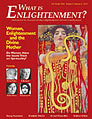
Daughter of the Goddess An interview with Z. Budapestby Susan Bridle
 Z. Budapest
What Is Enlightenment? would be incomplete without considering the women's spirituality movement and the contemporary pagan and Goddess religions with which it is closely aligned. Modern paganism, loosely based on prepatriarchal Old European myths and traditions, is one of the fastest growing religions in the United States today. It attracts both men and women who feel suffocated by Christianity and who want an alternative to the patriarchal values of domination which have proven so destructive to our planet's ecology and to many of the world's peoples. Worship of nature and a Goddess or "Great Mother" figure are often associated with pagan practices and rituals, and many women's groups have formed in recent years to celebrate a female deity and to create a new religious culture that empowers women.
Zsuzsanna Budapest, better known as "Z," is a passionately committed feminist who sees Goddess religion as a crucial ideological and psychological support to the work of feminism. She is considered to be one of the founding mothers of the women's spirituality movement, and coined the term "feminist spirituality." She is the author of The Holy Book of Women's Mysteries, The Grandmother of Time, Grandmother Moon, The Goddess in the Office, and The Goddess in the Bedroom. A High Priestess within her tradition, she leads Goddess-centered retreats and celebrations throughout the year.
From the moment we began our conversation, Z was utterly unapologetic and often outrageous. I found myself in a refreshingly frank dialogue with a woman who has vigorously rejected the constricting ideas that women should be sweet and meek, seen but not heard. In complete accordance with her about many of her observations, I respect her willingness to look squarely into the painful effects of patriarchy on the race as a whole, and for women in particular. Z is undaunted in her efforts to liberate women from the life-inhibiting conditions that we still confront in so many ways in the world today. Yet at the same time, in speaking with her, I wondered whether the women's spirituality movement, in its reaction against what it sees as patriarchal religions' imbalanced emphasis on transcendence, goes too far in the other direction. And while the feminist critique of patriarchal religions is valid and valuable, I wondered if it overlooks the true spiritual impulse that is the source and inspiration of those traditions.
Though left with questions about her views, I couldn't help but delight in the opportunity of speaking with this remarkable woman. Z approached this interview with the same unbounded passion and generosity of spirit that characterizes her work. I was affected by her fiery independence and natural confidence, and immediately understood why she has inspired countless women to fight for their own self-respect and personal freedom. Despite our differences, we engaged in a lively and penetrating discussion that is exactly the kind of dynamic exploration that What Is Enlightenment? is all about. And Z seemed to enjoy our dialogue as much as I did. At the end of our conversation she told me with her customary directness, "You've been a wonderful, challenging interviewer, I must say. These interviews usually bore me to death."

|


 printer friendly
 email the editors
 advertise
 reprints